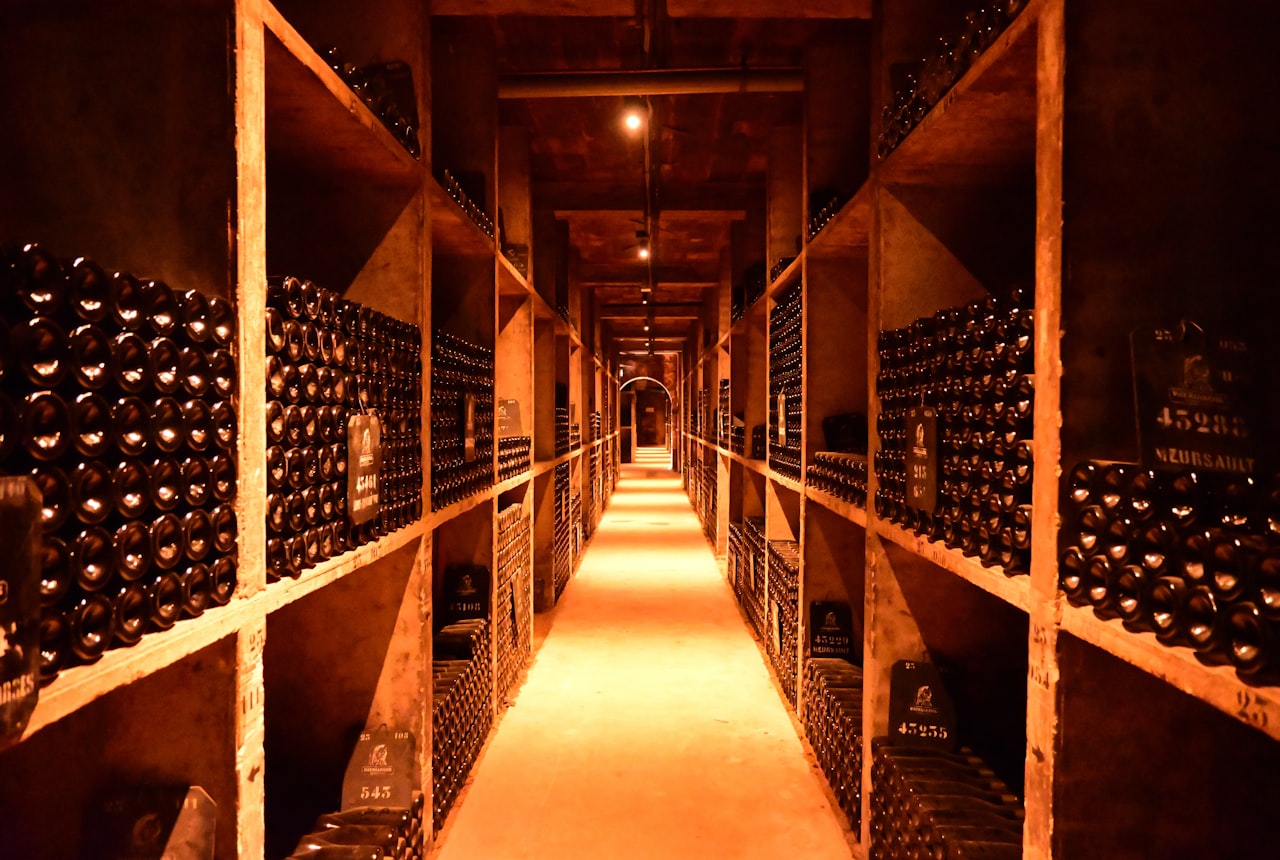
How oak barrels shape a wine
Why oak makes Malbec taste like vanilla, smoke and chocolate — the complete visual guide to French vs American oak, toasting, barrel size and time.
Why oak, of all woods?
Oak has one rare combination: it's strong enough to bend into a watertight barrel, porous enough to let in tiny amounts of air, and flavorful enough to give the wine something back. Almost no other wood does all three.
That third quality is the secret. When wine sits in new oak for months, compounds in the wood — lactones, aldehydes, vanillin — slowly migrate into the liquid. The result is the vanilla, coconut, spice, smoke and chocolate notes you taste in serious Malbec, Cabernet Sauvignon and oaked Chardonnay.
French vs American: the only choice that really matters
Most fine wine in the world is aged in one of two oaks. They are not interchangeable.
French oak (Quercus robur, Quercus petraea) has tight grain — fewer pores per inch. Less oxygen seeps through, slower extraction. The flavors are subtle and savory: clove, cedar, dark chocolate, roasted coffee, smoke, hazelnut. Elegant. Expensive (a French oak barrel runs 2–3 times the price of American).
American oak (Quercus alba) has wider grain. More oxygen exchange, faster flavor extraction. The flavors are bolder and sweeter: vanilla, coconut, dill, dried herbs, toasted bread. Assertive. The classic choice for Rioja Gran Reserva and big Australian Shiraz.
| French Oak | American Oak | |
|---|---|---|
| Species | Quercus robur / petraea | Quercus alba |
| Grain | Tight | Wide |
| Flavor | Clove, cedar, smoke, mocha | Vanilla, coconut, dill |
| Style | Subtle, savory | Bold, sweet |
| Price | $$$ | $ |
| Classic for | Bordeaux, Burgundy, Argentine icon Malbec | Rioja, Shiraz, bourbon |
Most top Argentine Malbecs use French oak — sometimes 100% French, sometimes a blend. American oak shows up more in everyday and mid-range wines.
Toasting: where the magic actually happens
Here's the part most people don't know. The flavor a barrel gives a wine doesn't come mostly from the wood itself — it comes from how the wood was burned.
To bend the wooden staves into a barrel shape, the cooper (barrel-maker) holds them over a fire. The longer the fire, the deeper the toast. Each level changes everything.
| Toast level | Time | Flavors |
|---|---|---|
| Light | ~5 min | Fresh wood, subtle spice |
| Medium | ~10 min | Vanilla, butter, caramel, mild smoke |
| Medium+ | ~12 min | Stronger vanilla, baking spice, light coffee |
| Heavy | ~15 min | Mocha, espresso, smoke, charred bread |
Medium toast is the most common. Heavy toast is where the bold “smoky” character of some Argentine Malbecs comes from — when you taste mocha and espresso in the wine, you're really tasting the cooper's fire.
Size matters more than you'd think
Two oak barrels with the same wood, same toast — different sizes — give wildly different wines.
The reason is surface area to volume. A small barrel has more wood in contact with each liter of wine, so more flavor and more oxygen exchange. A huge barrel has very little wood per liter — the wine ages gently, almost neutrally.
- Barrique (225L) — the Bordeaux standard. Big oak influence. The classic.
- Hogshead (300L) — used in Burgundy and Rioja. Medium influence.
- Puncheon (500L) — gentle, used for Chardonnay and elegant reds.
- Foudre (1,000–10,000L) — huge old vats. Almost zero oak flavor; used just to let the wine breathe. Trending hard right now among Argentine winemakers like Altos Las Hormigas (they age Malbec 18 months in untoasted foudres, by the way).
The bigger the barrel, the more the wine tastes of itself rather than the oak.
How long? It depends on the wine
Aging time is the third lever. More time means more oak, but also softer tannins and slower oxidation. Real examples:
- Light reds & whites: 4–10 months (Pinot Noir, unoaked-style Chardonnay)
- Mid-bodied reds: 10–14 months (most Argentine Malbec, Bordeaux)
- Big structured reds: 14–24 months (icon Malbec, Cabernet Sauvignon, Tannat)
- Long agers: 24+ months (Brunello, Gran Reserva Rioja, top Argentine icon wines)
And here's the trick: most wines aren't aged in 100% new oak. A common ratio is 30% new French + 30% used French + 40% used American — giving complexity without overpowering. The percentage of new oak on the back label tells you how heavily oaked the wine will taste.
What this means for Argentine wine
Argentina has a fairly recent oak tradition. Until the 1990s Malbec revolution, most domestic wine was aged in old, neutral chestnut tanks. The pivot to new French oak in the 90s — championed by Nicolás Catena — is one of the technical reasons Argentine Malbec suddenly tasted “world-class” in international tastings.
Today most serious Argentine producers use French oak for icon wines, and many are quietly moving toward foudres and concrete tanks to dial back the wood and let the country's increasingly elegant fruit speak for itself.
If you've ever tasted a Catena Zapata “Adrianna” and noticed it's both ripe and surprisingly restrained — that subtle balance is partly the barrel program. It's also why “no oak” or “100% concrete” labels have started appearing on the most modern bottles.
Read next
Steel, concrete or amphora?
What happens when wine isn't aged in wood.
Coming soonHow decanting actually works
When oxygen helps, and when it hurts.
How Malbec saved Argentina
The wines that started the New World oak conversation.
Quick answers
Why are wine barrels made from oak?
Oak combines three rare qualities: it's strong enough to bend into a watertight barrel, porous enough to let in small amounts of oxygen, and flavorful enough to add character to the wine. Almost no other wood does all three.
What's the difference between French and American oak?
French oak has tighter grain, slower flavor extraction, and savory notes — clove, cedar, mocha, smoke. American oak has wider grain, faster extraction, and sweeter notes — vanilla, coconut, dill. French oak costs 2–3 times more and is the choice for most serious Argentine Malbec.
What is toasting a wine barrel?
Toasting is the process of holding the wooden staves over a fire to bend them into a barrel shape. The longer the fire, the deeper the toast — and the more vanilla, caramel, mocha and smoky flavors the barrel imparts to the wine. Most wine barrels are medium-toasted.
Why does barrel size matter?
Smaller barrels have more wood surface in contact with each liter of wine, so they impart more flavor and allow more oxygen exchange. A standard 225-liter barrique gives strong oak character; a 1,000+ liter foudre gives almost none and is used mainly to let the wine breathe gently.
How long is wine aged in oak?
It varies by style. Light reds and unoaked-style whites get 4–10 months; mid-bodied reds like most Argentine Malbec get 10–14 months; structured icon wines get 14–24 months; and the longest-aged wines like Gran Reserva Rioja and Brunello can go beyond 24 months.