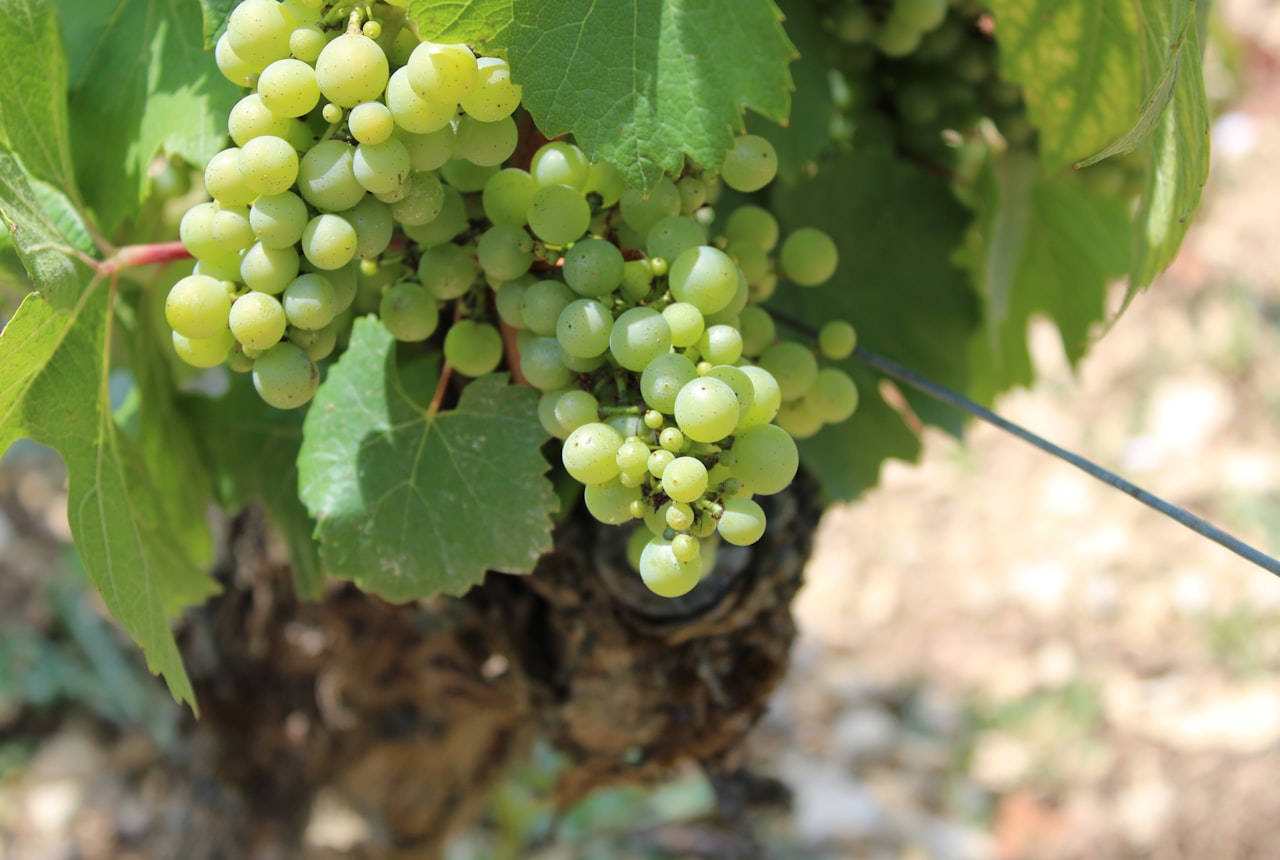
Chardonnay: Argentina's high-altitude white revolution
The world's most famous white grape, reborn in the cold, stony heights of the Uco Valley — taut, mineral and quietly serious.
For years, the story of Argentine wine was a red story. Then a handful of winemakers climbed higher up the Andes than anyone thought sensible, planted white grapes in cold, stony ground, and started a quiet revolution. One of the country's most respected producers now calls white wine one of the biggest revolutions happening in Argentina today — and at the centre of it is Chardonnay, the world's most famous white grape, reborn at altitude.
The grape everyone knows, somewhere new
Chardonnay needs no introduction. It is the great white grape of Burgundy, the backbone of Champagne, grown in nearly every wine country on earth. It is also famously a winemaker's grape — a relatively neutral canvas that takes its character from where it grows and how it is handled, from lean and steely to rich and buttery.
What makes Argentina's version worth seeking out is the where. The country has taken a familiar grape to an unfamiliar extreme — and the result is a Chardonnay unlike almost anywhere else.
Why altitude changes everything
The problem with white wine in a hot, sunny country is acidity: warmth makes grapes ripe and flabby, and crisp whites need freshness. Argentina's answer, as with Pinot Noir and Cabernet Franc, is elevation. In the high reaches of the Uco Valley, the engine of this revolution, vineyards climb from around 1,100 up toward 1,500 metres and beyond. The intense mountain sun ripens the fruit; the bitterly cold nights lock in the acidity. That day-to-night swing is the whole secret.
There is a second ingredient that makes high-altitude Argentine Chardonnay special: the soil. The best districts — above all Gualtallary in Tupungato — sit on rare calcareous, limestone-rich, stony ground. Limestone is the classic soil of white Burgundy, and it is unusual in the New World. It is the reason these wines carry a mineral, chalky tension that wine lovers recognise instantly. The same district in Mendoza that makes prized Malbec and Cabernet Franc, it turns out, makes Argentina's finest whites.
The wine that started it: White Bones and White Stones
If you want one origin point for the revolution, it is Catena's Adrianna Vineyard in Gualtallary, planted in 1992. From it came two landmark Chardonnays — White Bones and White Stones, named for the different soils beneath them (one with fossilised calcium deposits, the other with stony alluvium). Made by Alejandro Vigil, widely regarded as one of the country's greatest winemakers, they showed the world that Argentina could produce serious, terroir-driven, age-worthy white wine — and gave every other producer a direction to aim for.
Today that vanguard runs along an arc of high-altitude sites across the Uco — Los Chacayes, San Pablo, Gualtallary, La Carrera — where Chardonnay is the queen of white grapes. Producers like Zuccardi, Rutini and Achaval Ferrer are now chasing single-vineyard whites of real precision, some of them deliberately made without malolactic fermentation to keep that knife-edge freshness.
The country quietly proving its mountains can make whites as serious as its reds.
What it tastes like
Argentine high-altitude Chardonnay leans toward the lean, precise and mineral end of the spectrum rather than the heavy, oaky style. Expect citrus and grapefruit, white flowers and honeysuckle, sometimes a note of almond or wet chalk from those limestone soils. The texture is taut and energetic, carried by bright acidity, with the best examples often compared to white Burgundy for their finesse. Some are made in a richer, partially oak-aged style with baked-pastry and nutmeg notes — but the wines making Argentina's name are the sharp, high-altitude ones.
There is a sparkling angle too: the same naturally high acidity makes Uco Valley Chardonnay (often with Pinot Noir) excellent raw material for traditional-method sparkling wine.
How to drink it
Chardonnay's range makes it one of the most food-friendly whites there is. The lean, mineral Argentine style is lovely with white fish and seafood, ceviche, roast chicken and creamy pastas; richer, oak-touched versions stand up to lobster, cheese and even pork. Serve it well-chilled but not ice-cold — too cold and you'll mute that lovely mineral character. (If you want the exact temperatures and glassware, our guide to serving Argentine wine lays it out.)
If your sense of Argentine wine is all Malbec and asado, a high-altitude Chardonnay is the single best way to flip your expectations. It is the country quietly proving that its mountains can make whites as serious as its reds — and that the revolution is only getting started.
Quick answers
Is Argentine Chardonnay good?
Yes — it is at the heart of Argentina's white-wine revolution. The best examples, from the high-altitude Uco Valley, are taut, mineral and age-worthy, often compared to white Burgundy, and rank among the country's finest wines.
Where is the best Chardonnay in Argentina grown?
In the high-altitude Uco Valley in Mendoza, especially the Gualtallary district of Tupungato, where vineyards above roughly 1,100–1,500 metres sit on rare limestone-rich, stony soils that give the wines a mineral, Burgundian character.
What does Argentine Chardonnay taste like?
The signature high-altitude style is lean and precise, with citrus, grapefruit, white flowers, honeysuckle and a chalky mineral note, carried by bright acidity. Richer, oak-aged versions also exist, with baked-pastry and nutmeg notes.
What are White Bones and White Stones?
They are two landmark single-vineyard Chardonnays from Catena's Adrianna Vineyard in Gualtallary, named after the different soils beneath the vines. Made by winemaker Alejandro Vigil, they helped prove Argentina could make world-class white wine.
What food pairs with Argentine Chardonnay?
The lean, mineral style suits white fish, seafood, ceviche, roast chicken and creamy pasta, while richer oak-aged versions pair with lobster, cheese and pork. Serve well-chilled but not ice-cold to preserve the minerality.


