La Rioja: the quiet birthplace of Torrontés
Older than almost anywhere else in Argentine wine, smaller in fame than its southern neighbors, and quietly essential to the story in your glass.
Most travelers meet Argentine wine in Mendoza and end their education there. But the grape that Argentina calls its very own — aromatic, floral Torrontés — feels most at home several hundred kilometers to the north, in a dry, sun-blasted province that shares its name with a famous region in Spain. This is La Rioja: older than almost anywhere else in Argentine wine, smaller in fame than its southern neighbors, and quietly essential to the story in your glass.
A province older than the fame
La Rioja is one of the oldest wine regions in Argentina. Spanish settlers planted the first vines here in the late 16th century, and the province itself was founded in 1591 — making this one of the original cradles of South American viticulture. Today it sits as Argentina's third-largest wine producer by volume, even though it rarely makes the cover of a wine magazine.
The name itself carries a small piece of drama. The province was named after the northern Spanish wine region by Juan Ramírez de Velasco, a settler born in the Spanish La Rioja. Centuries later, that shared name became a legal headache: it took a 2011 court ruling to confirm that the Argentine province could keep labeling its bottles as “La Rioja Argentina.” Two regions, one name, an ocean apart — and both convinced the title belongs to them.
Where it is, and why the wine tastes the way it does
La Rioja's vineyards cluster in narrow, irrigated valleys in the west of the province, hemmed in between two mountain ranges: the Sierra de Velasco to the east and the snow-capped Sierra de Famatina to the west. Collectively this is the Famatina Valley, and it does almost all of the heavy lifting — roughly 7,800 hectares are under vine across the province, with the Chilecito district alone accounting for about 80% of plantings.
Three things shape the wine here:
Altitude. Vineyards range from around 770 to more than 1,850 meters above sea level. That elevation, combined with a latitude near 29°S — among the closest wine regions in the world to the Equator — gives intense daytime sun balanced by genuinely cold nights.
Aridity. Rainfall is under 200 millimeters a year. Without the meltwater channeled down from the Andes, none of this would be possible; every vineyard depends on irrigation. The flip side is a gift: the dry air keeps vine disease low, which makes organic farming far easier here than in wetter regions.
Wind. The valley runs along the edge of the Andes like a natural wind tunnel. That constant ventilation, together with the wide swing between hot days and cool nights, preserves acidity and aromatics in the grapes — which matters enormously for Torrontés.
The practical result: La Rioja's Torrontés tends to be fresher, with brighter acidity and lower alcohol, than examples grown farther south. Summer heat can still be brutal — temperatures reach into the mid-40s °C — but the altitude and the cold nights pull the wine back into balance.
The grape that defines the place
If you have read our guide to Torrontés, you already know the headline: it is Argentina's signature white, and it is genetically Argentine, a natural cross of Muscat of Alexandria and the old colonial Criolla Chica. There are three Torrontés varieties, but the one that matters here is the finest of them — Torrontés Riojano, named for this very province.
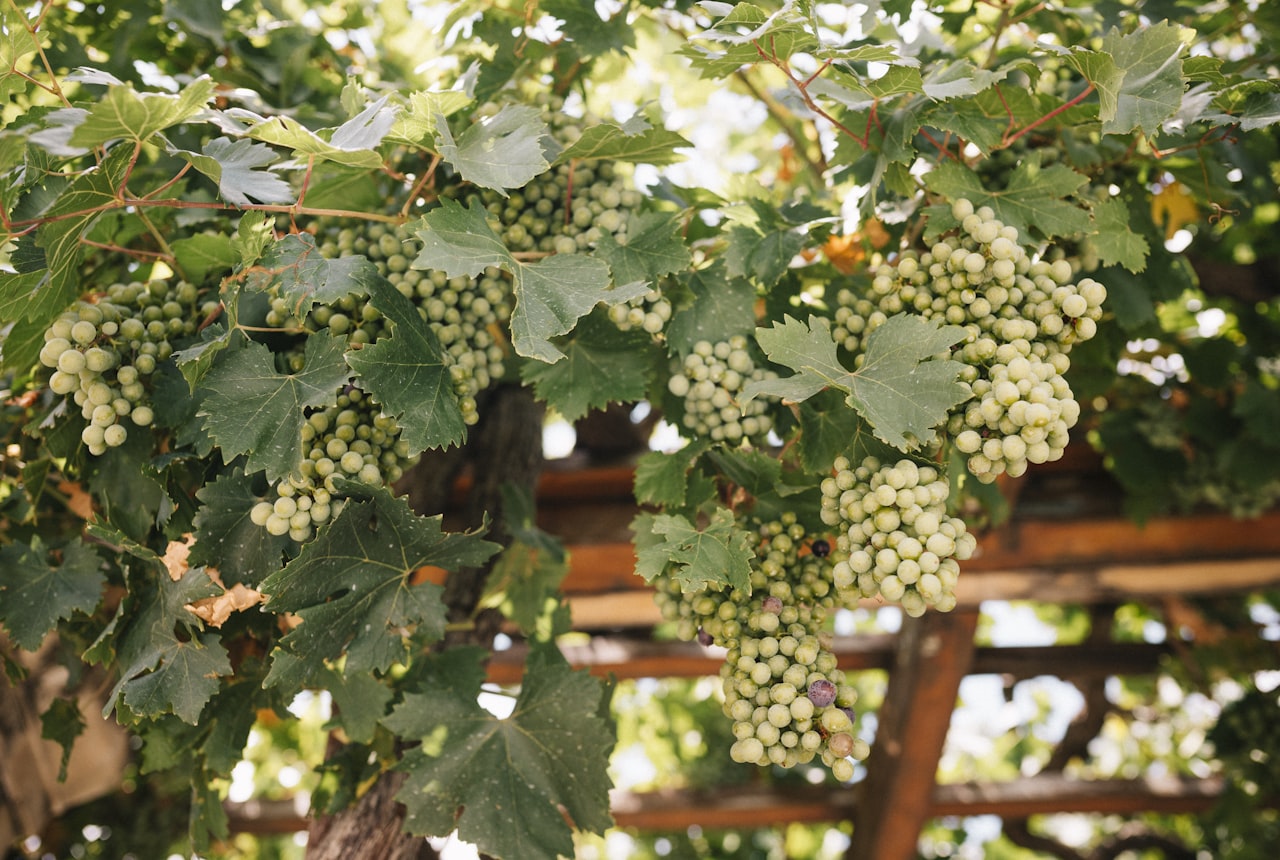
It is the most planted grape in La Rioja by a clear margin, with somewhere around 2,150 hectares dedicated to it. Traditionally it is trained overhead on pergolas — the parral system — which shades the fruit from that fierce sun. In the glass it does what good Torrontés always does: a nose full of jasmine, orange blossom, peach and lychee that promises sweetness, followed by a finish that is usually dry and clean. La Rioja's producers spin it into several styles — crisp dry whites to drink young, lush late-harvest dessert wines, and even tank-method sparkling.
Reds matter too, even if they travel less. Malbec, Bonarda and Syrah are the most significant, and the higher, cooler Famatina sites produce the most structured examples. (If Bonarda is new to you, it is Argentina's quiet workhorse — a grape we cover in its own guide.)
La Riojana: the cooperative that is the region's heartbeat
You cannot understand La Rioja wine without understanding La Riojana. Founded in 1940 by Italian immigrants in Chilecito, it has grown into something genuinely unusual in the wine world: a cooperative of around 500 grower families, most of them farming tiny plots of less than three hectares, who pool their grapes and share the proceeds.
It is the largest wine cooperative in Argentina and is widely described as the largest Fairtrade-certified winery in the world — the first wine organization in the country to earn Fairtrade certification. That is not just a marketing line. The cooperative has reinvested millions of dollars of Fairtrade premiums into local community projects, from a landmark water project for the village of Tilimuqui to schools and infrastructure across the valley.
It is also a serious force in sustainability. Around a thousand hectares are certified organic, and the dry, pest-light climate makes that genuinely viable — the cooperative even runs sheep through the vineyards to graze weeds and fertilize the vines. One of its Fairtrade sparkling wines reached the UK in 2024 as one of the first Fairtrade sparkling wines on European shelves.
For a visitor, this is the most welcoming door into La Rioja wine. The La Riojana winery sits in Chilecito just a few blocks from the main square, and offers tours and tastings of its range — a rare chance to taste Torrontés Riojano at its source while learning how a whole community built a wine industry together.
Visiting: the Wild West with vineyards
Chilecito is the natural base. It is a small, dusty, mountain-rimmed town that more than one visitor has compared to the Wild West — named, in fact, after the Chilean miners who poured in during a 19th-century gold rush. From here the Famatina Valley opens up: rows of vines on the valley floor, the snow line of the Sierra de Famatina above them, and barely another tourist in sight.
This is the appeal and the warning in one sentence. La Rioja is not a polished, signposted wine-tourism machine like Mendoza. It rewards travelers who like quiet, raw landscape and don't mind a little improvisation. If you are building a northern wine route, it slots naturally between Salta and the Calchaquí Valley to the north — Torrontés country of a different stripe — and the powerhouse of Mendoza to the south.
Go for the Torrontés. Stay for the feeling that you have found something most of the world drove straight past.
At a glance
- Country
- Argentina (northwest)
- Founded
- 1591 — among the oldest in the country
- Main valley
- Famatina Valley
- Hub town
- Chilecito
- Vineyard area
- ~7,800 hectares
- Altitude
- ~770–1,850 m
- Climate
- Arid high desert, <200 mm rain
- Flagship grape
- Torrontés Riojano
- Also grown
- Malbec, Bonarda, Syrah
Quick answers
Where is La Rioja wine region in Argentina?
It is in the northwest of the country, in the foothills of the Andes north of Mendoza and San Juan. Its vineyards are concentrated in the Famatina Valley, between the Sierra de Velasco and the Sierra de Famatina, with the town of Chilecito as the main hub.
Is La Rioja in Argentina the same as La Rioja in Spain?
No — they are two different wine regions on opposite sides of the Atlantic that share a name. The Argentine province was named after the Spanish region by an early settler. A 2011 court ruling confirmed that Argentina can keep labeling its wines “La Rioja Argentina.”
What wine is La Rioja, Argentina known for?
Torrontés Riojano, the finest of Argentina's three Torrontés varieties and the most planted grape in the province. It produces aromatic, floral white wines. The region also makes Malbec, Bonarda and Syrah.
What is La Riojana?
La Riojana is a wine cooperative founded in 1940 in Chilecito. With around 500 grower families, it is the largest wine cooperative in Argentina and one of the largest Fairtrade-certified wineries in the world, known for organic and Fairtrade wines.
Can you visit wineries in La Rioja?
Yes. The La Riojana cooperative in Chilecito offers tours and tastings just a few blocks from the town's main square. La Rioja is far quieter and less developed for tourism than Mendoza, which is part of its charm.


