Corks vs screw caps: the real difference
The honest guide to cork vs screw cap — what actually matters, what's myth, and why a screw cap doesn't mean a cheap wine.
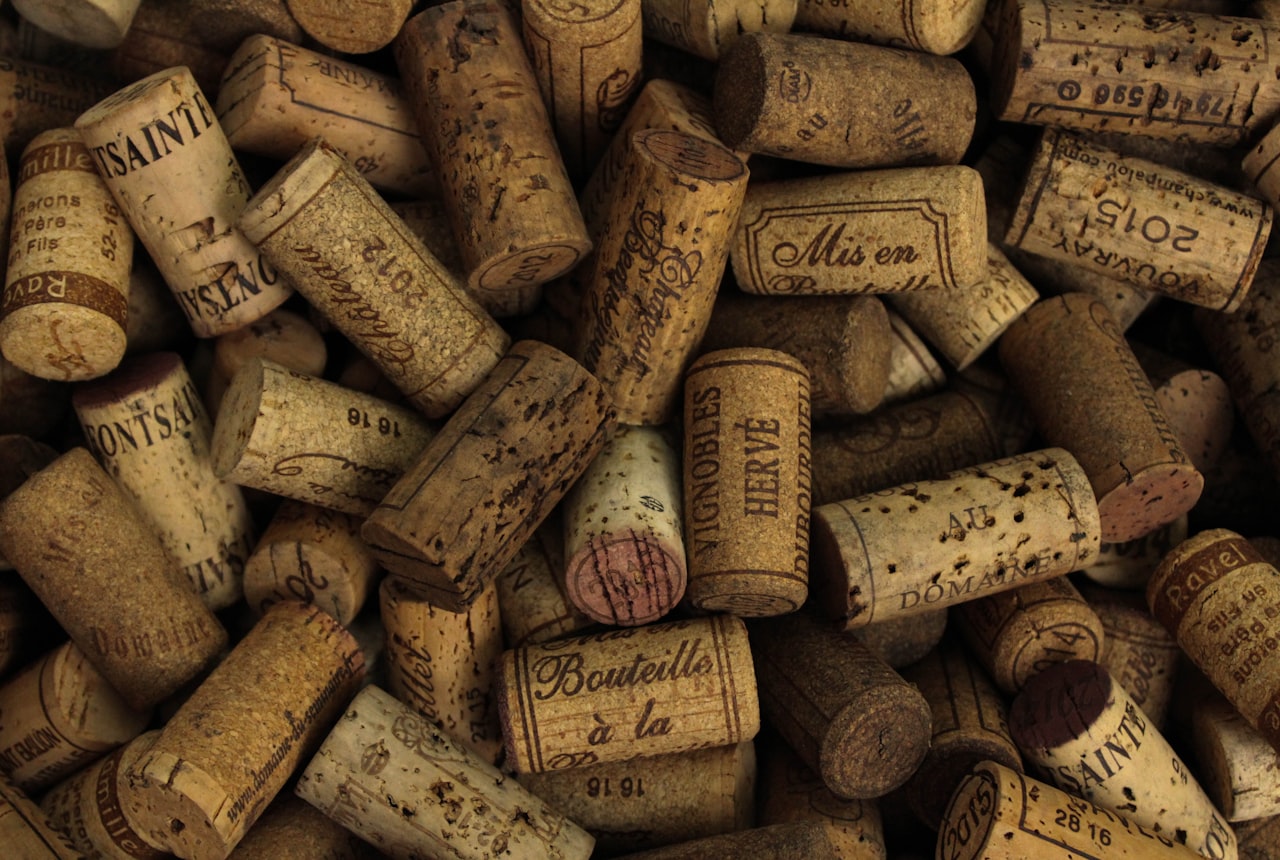
What the closure actually does
A wine closure has exactly one purpose: control how much oxygen reaches the wine. Tiny amounts of oxygen over years soften tannins, deepen color, and unlock complex aromatics. Too much oxygen flattens the wine. Too little, and an ageworthy wine gets stuck.
An ideal natural cork lets in roughly 1 mg of oxygen per year. That's tiny enough you can't taste it on the first sip — and exactly enough to shape the wine over a decade.
Cork — what's right, what's wrong
Built for long aging — at a real risk. Natural cork is harvested from the bark of cork oak trees, mostly in Portugal and Spain. The tree isn't cut down; the bark grows back over 9 years. Sustainable. Romantic.
With one big problem: TCA (cork taint) — a compound formed when chlorine reacts with natural fungi in cork bark. Gives wine a musty, wet-cardboard, damp-basement, wet-dog aroma. Affects roughly 3–5% of cork-sealed bottles.
What cork does well: slow, controlled oxygen for serious reds aging 10+ years. There's still no proven substitute for high-end Bordeaux or icon Malbec.
Screw cap — what's right, what's wrong
Made famous by Australia in 1964. Screw caps were patented in 1889 but didn't enter wine seriously until 1964, when Yalumba and other Australian producers got tired of cork taint and switched. The dominant brand is Stelvin.
What screw cap does well: zero cork taint, total consistency, no corkscrew needed, lower cost, recyclable. Many Australian and New Zealand producers — even premium icon-level — use screw caps exclusively.
The live debate: long-term aging. Some producers say screw-cap wines age beautifully, just slower. Others believe true 20-year evolution still needs cork.
So which is better?
Three honest answers. Wines for early drinking (most whites, rosés, fruity reds) → screw cap is often better. Freshness preserved, no TCA risk.
Wines for long aging (top reds, icon Malbecs, Bordeaux first growths) → cork still favored. The slow oxygen exchange is part of how they evolve.
Premium wines in between → increasingly use DIAM (a technical cork made from cork particles cleansed of TCA) or premium screw caps with calibrated liners. The wine inside matters 1000 times more than what's on top.
What you'll find on Argentine bottles
Cork for icon. Cap for fresh. Icon Malbecs (Catena Zapata, Zuccardi, Susana Balbo top tier) use natural cork or DIAM. Built for 10+ year aging. Mid-range Malbecs and Bonardas — usually natural cork.
Entry-level reds for early drinking — increasingly screw cap. Most Torrontés and other whites — increasingly screw cap, especially for export. The screw cap preserves the floral aromatics.
Sparkling — always cork (the internal pressure demands it). If you see a serious Argentine red under screw cap, don't dismiss it — the producer chose deliberately.
Read next
Quick answers
Does a screw cap mean a wine is cheap?
No. Australia and New Zealand use screw caps for nearly all their wines, including premium and icon-level bottles. The closure is the winemaker's choice — not a quality signal. A great Malbec under screw cap will beat a mediocre Malbec under cork every time.
Why do some wines still use cork?
Because natural cork allows a very slow, controlled amount of oxygen into the bottle — about 1 milligram per year. That tiny ingress is what lets serious reds evolve over 10–30 years. For ageworthy wines, no proven substitute has matched cork yet.
What is cork taint?
A faulty bottle caused by TCA, a compound formed when chlorine reacts with natural fungi in cork bark. Wine smells of wet cardboard or damp basement. About 3–5% of cork-sealed bottles are affected. If you suspect cork taint, ask for a replacement.
Can a wine under screw cap age?
Yes, but the debate is alive. Wines under screw cap age more slowly. Some producers believe screw-cap wines age beautifully, just differently. Others say true 20-year evolution still requires cork. Modern Saranex-lined screw caps support 5–10 years of aging well.
What about synthetic corks and DIAM?
Synthetic corks are mostly for inexpensive early-drinking wines. DIAM is a technical cork made from cork particles cleansed of TCA — premium quality with calibrated oxygen exchange, increasingly used for serious wines that want cork's behavior without taint risk.