Mendoza: where the Andes make wine
A field guide to Argentina's wine heartland — what grows here, why the altitude changes everything, and how to walk the vines yourself.
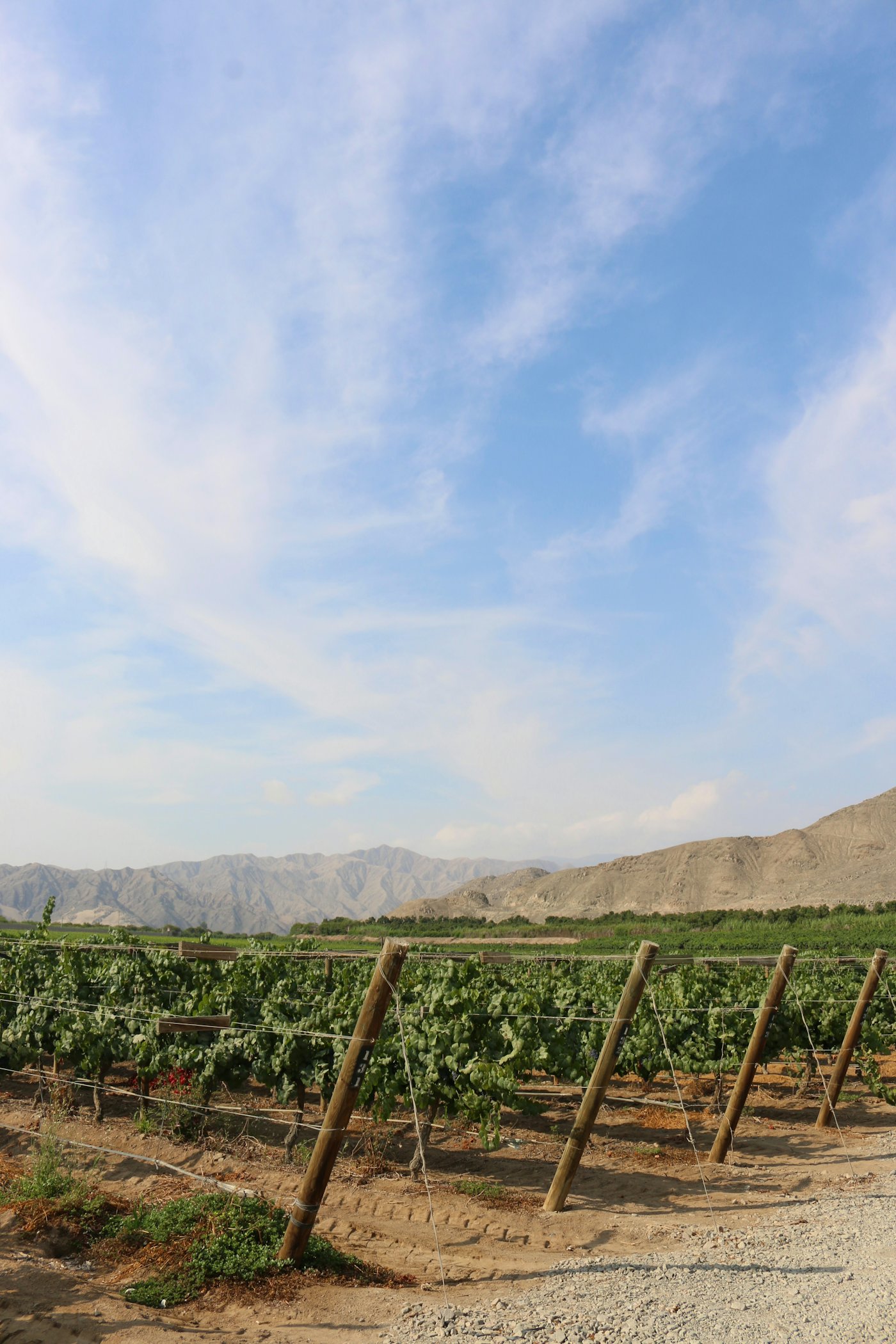
There is a moment, driving west out of Mendoza city, when the vineyards begin and the Andes stop being scenery and start being the point. The vines run in low green rows toward a wall of rock that still has snow on it in March, and you understand, before anyone explains it, that the mountains are not the backdrop to the wine here. They are the wine.
Mendoza makes around 70% of all the wine in Argentina, across roughly 146,000 hectares of high desert. That scale could feel industrial. It doesn't. It feels like a frontier that happens to be very good at one thing.
Why the altitude matters more than the grape
Most wine regions talk about soil and rain. Mendoza talks about height and sun.
Almost nothing grows here without irrigation — this is a desert that survives on snowmelt channelled down from the Andes, a system the region has refined for centuries. What the desert gives in return is light. At 900, 1,200, sometimes 1,500 metres above sea level, the ultraviolet light is fierce, and the vines defend themselves the way anything does at altitude: they thicken their skins. Thicker skins mean deeper colour, firmer tannins, more concentration. It is the single biggest reason an Argentine Malbec looks almost black in the glass and tastes denser than its French cousin.
Then there is the daily temperature swing. Hot days ripen the fruit and build sugar; cold mountain nights slow everything down and lock in acidity. You end up with wine that is both ripe and fresh — the balance most winemakers spend their lives chasing, handed over by geography.
If you only remember one thing about Mendoza: the wine tastes the way it does because of where it is grown vertically, not just where it sits on the map.
The three valleys, and how they differ
Newcomers hear “Mendoza” as one place. Drinkers learn it as at least three, each with its own temperament. For the wider picture of Argentina's growing zones, see our Regions guide.
| Valley | The feel | Visiting | Known for |
|---|---|---|---|
| Maipú | Historic, easy-going | Easy — some walk-ins, bike tours | Warm, full-bodied reds; closest to the city |
| Luján de Cuyo | Classic, prestigious | Reserve ahead | Old-vine Malbec — the birthplace |
| Valle de Uco | New, high, premium | Reserve ahead; give it a full day | Elegance, ageing potential, the views |
Maipú — the old heart
Just south of the city, Maipú is the warmest and most historic of the three, and by far the easiest to visit. Many wineries take walk-ins, and a good number of travellers tour it by bicycle, pedalling between bodegas in an afternoon. The wines lean full-bodied and generous, with ripe red fruit and a warm, almost tobacco-and-cedar edge. If you have one day and no plan, start here.
Luján de Cuyo — the birthplace
This is where Argentine Malbec became Argentine. In 1989, Luján de Cuyo established the first controlled appellation in all of the Americas, created specifically to protect old-vine Malbec at a time when growers were pulling the variety out. Some of those vines are now over a hundred years old — and here is the detail serious wine lovers prize: thanks to a quirk of local geography, many of Mendoza's vines grow ungrafted, on their own original roots — a rarity almost lost in Europe, where the phylloxera plague forced nearly everything onto grafted American rootstock. The wines from here, around the villages of Agrelo, Vistalba, Perdriel and Las Compuertas, are the region's classics: structured, dark-fruited, with that famous dusty, mineral finish. It is sometimes called the Napa Valley of South America, and it is home to landmark estates like Catena Zapata. Most of its wineries require a reservation, so this is not a drop-in day.
Valle de Uco — the new frontier
Drive about an hour and a quarter further from the city and the land climbs again, up toward 1,500 metres and beyond. The Uco Valley is the youngest of the three and, for many drinkers and critics, now the most exciting. The extra altitude gives wines of real elegance and serious ageing potential, and the scenery — blue irrigation lakes, raw mountain, vineyards running straight at the peaks — is the postcard people remember. It has drawn winemakers from around the world; you'll hear names like Zuccardi, Salentein and the French-led Clos de los Siete. Give it a full day. It earns it.
How to actually visit — the part most guides skip
Mendoza has more than 1,500 wineries and the most developed wine-tourism infrastructure in South America. That is the good news. The catch: you cannot wing it.
Outside of Maipú's more relaxed estates, the best wineries work by reservation, and the standout ones — especially in the Uco Valley — book out their tastings and famous vineyard lunches weeks ahead. Arriving unannounced at a top bodega and hoping for a table is, as one guide put it, not a strategy.
A few honest pointers:
- Don't drive yourself if you plan to taste. The smart move is a private or small-group tour with a bilingual driver-guide who arranges the reservations for you. You taste; they drive.
- Pick one valley per day. The three are far enough apart that trying to combine them means seeing none of them properly.
- Book the lunches first. In wine country the long, paired winery lunch is the main event, not an afterthought. Secure those, then build the rest of the trip around them.
When to go
Mendoza is a year-round destination, but the season changes the experience completely.
Autumn (March–May) is harvest, and the most atmospheric time to come. The vineyards turn gold, the cellars smell of fermenting fruit, and you can often watch grapes being picked, sorted and pressed — some wineries will even let you taste the juice mid-transformation. The crown jewel is the Fiesta Nacional de la Vendimia, Mendoza's grape-harvest festival in the first week of March, with parades, the crowning of a harvest queen, and a final spectacle under the Andes that National Geographic once called the best harvest festival in the world. If you want this, book three to four months ahead — the city triples in size.
Spring (September–November) offers the best balance: pleasant weather, open wineries, fewer crowds.
May is the quiet insider's pick — autumn colour, mild days around 20°C, and prices noticeably lower than peak.
Summer (December–February) is hot and busy with local holidaymakers; winter (June–August) is sleepy in the vineyards but pairs beautifully with skiing in the high Andes for those who want both.
At a glance
- Country
- Argentina (west-central)
- Position
- Eastern foot of the Andes
- Vineyard area
- ~146,000 hectares
- Altitude
- 600–1,500 m (Uco reaches higher)
- Climate
- High-altitude desert, irrigated
- Wineries
- 1,500+ across three valleys
- Flagship grape
- Malbec
- Sub-regions
- Maipú · Luján de Cuyo · Valle de Uco
- Best time
- March (harvest) · Sep–Nov · quiet May
What to drink while you're there
Malbec is the headline, and you should drink it widely — it changes character from valley to valley, which is half the fun. But don't stop there. Look for Cabernet Franc, increasingly Mendoza's quiet star; Bonarda, the workhorse-turned-charmer; and, though it belongs further north, a cold glass of Torrontés to understand Argentina's white side. More on the grape that started it all in our Malbec deep-dive.
And eat the way Mendoza eats: with fire. The region runs on asado, and the smoke-and-char of grilled beef is the natural partner to a structured high-altitude red. We pair the two properly in What to drink with asado.
A table with a view
Mendoza is no longer only a place to taste — it has quietly become one of South America's great dining destinations, made official when the Michelin Guide arrived in Argentina in 2025. Much of the best eating happens at the wineries. In the Uco Valley, Zuccardi's Piedra Infinita Cocina — a Michelin-starred room of stone and glass aimed straight at the Andes — is the table everyone wants, while Francis Mallmann's Siete Fuegos, at The Vines resort, cooks everything over open flame in seven different ways. Closer to the city in Maipú, Espacio Trapiche and the cult favourite Casa Vigil turn lunch into the main event. Reserve any of these the moment your dates are fixed — they fill first, and they are reason enough to come on their own.
The mountains made this wine. The least you can do is go and meet them.
Quick answers
Where is the Mendoza wine region?
In west-central Argentina, at the foot of the Andes, roughly a 1 hour 40 minute flight from Buenos Aires. It is the country's largest and most important wine region.
What wine is Mendoza famous for?
Malbec above all — Mendoza is considered its spiritual home — along with Cabernet Franc, Bonarda and Cabernet Sauvignon.
Why is Mendoza wine so good?
High-altitude desert vineyards give intense sunlight (thicker skins, deeper colour) and large day-to-night temperature swings (ripeness with fresh acidity), all watered by Andean snowmelt. The result is concentrated yet balanced wine.
What are the main sub-regions of Mendoza?
Maipú (warm, historic, easiest to visit), Luján de Cuyo (the home of Argentine Malbec) and the Valle de Uco (the highest and newest, prized for elegance).
When is the best time to visit Mendoza wineries?
March for the harvest and the Vendimia festival; September to November for the best balance of weather and quiet; May for autumn colour at lower prices. Book ahead in all cases.
Do I need a reservation to visit wineries in Mendoza?
For most of the best estates, yes — especially in Luján de Cuyo and the Uco Valley. A guided tour will handle the bookings for you.