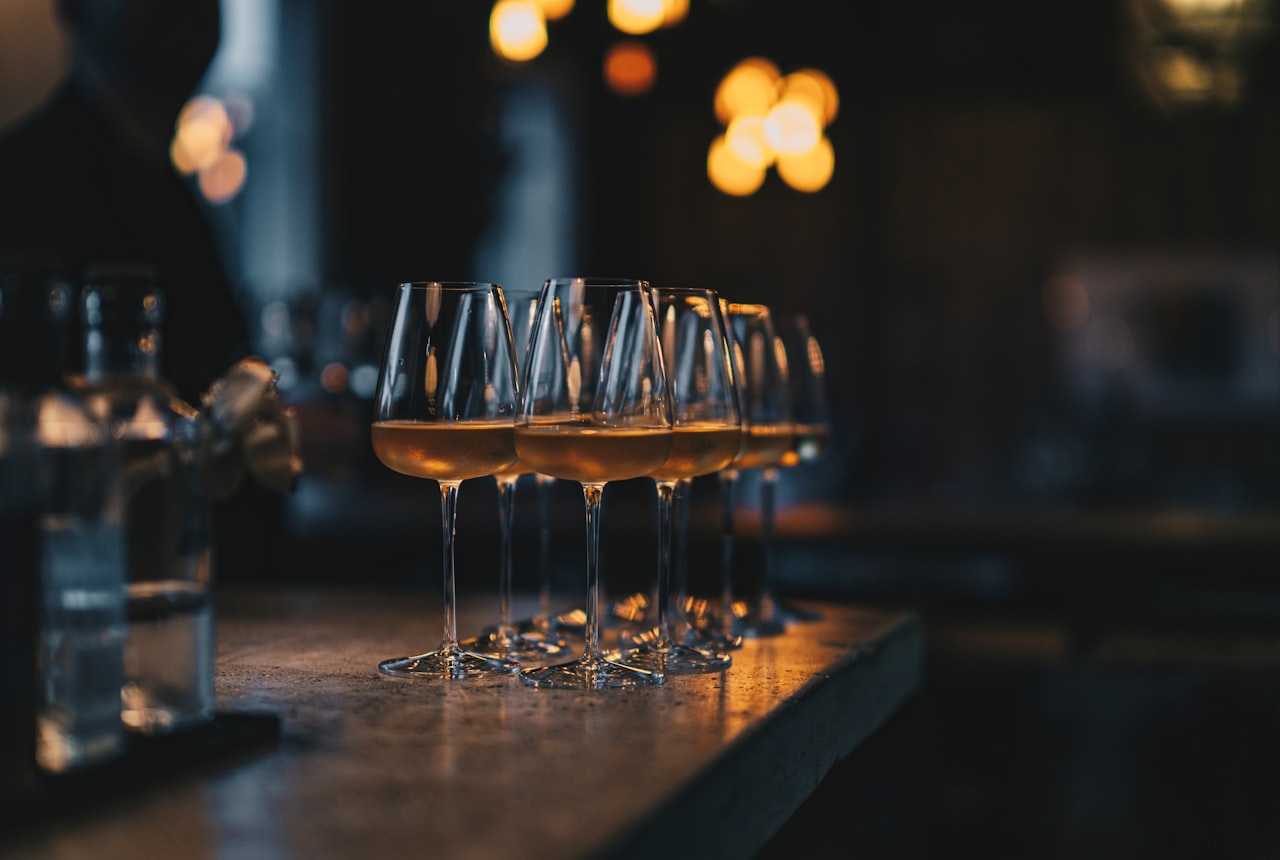
A row of empty wine glasses on a dark wood table
Wine Craft — How to Enjoy It

Why the wine glass shape matters

Bordeaux vs Burgundy, white vs sparkling, flute vs tulip — the practical guide to wine glass shapes, with the bare minimum you actually need at home.
Argentina Through Wine  ·  7 min read  ·  June 2026

In one lineThe glass changes the wine. The size of the bowl decides how aromas reach your nose; the shape of the rim decides where the wine lands on your tongue. Most homes need just two glasses, not twelve.
A row of empty wine glasses on a dark wood table, soft side-light, editorial composition
Five glasses, five jobs. But you only need two.

There is a famous trick: pour the same wine into a Bordeaux glass and a Burgundy glass, then taste blind. Most people swear they're drinking two different wines. They aren't — but the glass really does change the experience. Here's why, and what you actually need at home.

What the glass actually does

Three things, all at once:

1. It controls how much air meets the wine. A bigger bowl = more surface area = more aromas opening up. This is why structured red wines want bigger glasses.

2. It directs the wine to a specific part of your tongue. A narrow rim makes the wine flow straight to the tip of your tongue (you taste fruit and acidity first). A wider rim makes the wine spread across the front of the palate (softer, more rounded perception).

3. It concentrates the aromas at your nose. A tapered rim funnels the perfume upward into a small space — like cupping your hands around a candle.

That's it. Everything else is variation on those three principles.

The two essential red glasses

Forget the dozens of grape-specific designs Riedel and Zalto sell. There are really two red wine glass shapes that matter. They were named after the two French regions that argued the loudest about which was better.

Two empty wine glasses on a wooden table — one taller and narrower, one wider and balloon-shaped
Bordeaux on the left, Burgundy on the right. Same family, completely different mission.

The Bordeaux glass

Tall. Slightly narrower bowl. Higher rim. Designed for structured, tannic reds: Cabernet Sauvignon, Merlot, Bordeaux blends, Syrah and — yes — Argentine Malbec.

The height puts distance between your nose and the wine, which lets the alcohol vapor dissipate before reaching you. The taller bowl directs the wine straight to the back of the palate, where you perceive structure and richness rather than tartness. This is why a heavy red feels balanced in a Bordeaux glass and harsh in the wrong one.

Use it for: Malbec, Cabernet Sauvignon, Tannat, Petit Verdot, Syrah, Bordeaux blends.

The Burgundy glass

Shorter. Wide, balloon-shaped bowl. Slightly tapered rim. Designed for delicate, aromatic reds: Pinot Noir, Nebbiolo, Gamay, and the more elegant cool-climate reds.

The wide bowl gives the maximum air contact for those fragile, perfumey aromas to bloom. The slightly tapered rim then concentrates that perfume right under your nose. The wine hits the front of the tongue first, where you perceive sweetness and fruit — exactly what these grapes do best.

Use it for: Pinot Noir, Cabernet Franc (especially cool-climate Uco Valley), Nebbiolo, Gamay, lighter Bonarda.

The white glass

Smaller and narrower than red glasses. Less air contact, more focus on aromatics, and — crucially — the wine stays colder longer because there's less volume.

White wine wants to be served cold (see our serving guide), and a big bowl warms the wine fast. The narrower, more upright bowl of a white wine glass keeps the temperature in check while still letting aromatic whites like Torrontés and Chardonnay breathe.

A specific variation worth knowing: Chardonnay-style glasses are slightly wider than other whites — almost like a small Burgundy glass — to give oaked Chardonnay room to develop. Riesling and Sauvignon Blanc glasses are taller and narrower to preserve their bright, citrus aromatics.

But for most homes, one good white glass does the whole white-wine job.

The sparkling debate: flute or tulip?

Old answer: flute. New answer: tulip.

A tall sparkling-wine glass in warm light, showing the slim profile of a flute
Flute on the left (older fashion). Tulip on the right (what champagne houses now recommend).

Flutes are tall, narrow and elegant. They keep the bubbles going for a long time — small surface area, slow CO2 loss. But they trap the aromas at the bottom of the glass, away from your nose. Pretty to look at, less interesting to smell.

Tulip glasses are slightly wider at the bottom, tapered at the top. They preserve bubbles nearly as well as a flute, but the wider bowl gives the aromas room to develop and the tapered rim funnels them to your nose. This is what most serious Champagne houses now recommend for their own wines.

Coupes — the wide, shallow saucers Gatsby drank from — look fabulous but are terrible. They lose bubbles immediately and trap no aroma. Use them for cocktails, not champagne.

The “universal glass” question

For most people, one well-designed universal wine glass does about 85% of the job. Universal glasses are essentially a hybrid: a medium-large bowl, a slightly tapered rim, a balanced shape that flatters whites and reds alike.

Well-respected universals include the Zalto Universal, the Riedel Vinum Riesling (despite the name, it's a brilliant universal), and Jancis Robinson's “One” glass — designed by the British wine critic specifically as a one-glass-for-everything.

If you're buying glasses today, two paths:

  • Minimalist: 6 universal glasses. Done. Covers everything for casual drinking.
  • Enthusiast: 4 Bordeaux + 4 Burgundy + 4 white + 4 tulip sparkling = 16 glasses, the practical maximum.

You almost never need more than that. Riedel sells dozens of grape-specific shapes, and they're beautiful, but the difference between a “Cabernet Sauvignon glass” and a generic Bordeaux glass is marginal.

The detail nobody mentions: the rim

Almost as important as the shape is the thickness of the rim.

A thin rim (less than 1mm) lets the wine flow gently onto your tongue and feels almost weightless. A thick rim (the rolled edge you find on bar-quality glasses) interrupts the wine, slows it down, and gives a perceptible “edge” between you and the liquid.

If you upgrade one thing in your glass cabinet, upgrade to thin-rimmed glasses. The difference is more obvious than most people expect.

And one ground rule: hold the stem

Wine glasses have stems for a reason. Your hand is warm, the wine should be cool. Holding the bowl of the glass — fingers wrapped around the wine itself — raises the temperature within a few minutes, especially for chilled whites and rosés.

Always hold the stem, not the bowl. Stemless glasses look modern but they break this rule by design; they're fine for casual drinking and easier to wash, but they're worse for the wine.

For the deeper logic of temperature, decanting and glass care, see our serving guide.

Browse our Argentina wine tours

Common Questions

Quick answers

Does the shape of a wine glass really matter?

Yes — measurably. The bowl size controls how much air meets the wine (which changes aromas), the rim shape directs the wine to specific parts of your tongue (which changes perception), and the closed top concentrates aromas at your nose. The same wine genuinely tastes different from different glasses.

What's the difference between a Bordeaux and a Burgundy glass?

Bordeaux glasses are taller with a slightly narrower bowl — built for structured, tannic reds like Cabernet Sauvignon, Malbec and Syrah. Burgundy glasses are shorter with a wider balloon-shaped bowl — built for delicate, aromatic reds like Pinot Noir and Nebbiolo. Same family, different jobs.

Which wine glass should I use for Malbec?

A Bordeaux-style glass. Malbec is a structured, tannic red, and the tall narrower bowl of a Bordeaux glass directs the wine to the back of the palate where you perceive its richness, while letting the alcohol vapor dissipate from the height of the bowl.

Are flutes still the right glass for Champagne?

Not anymore, according to most Champagne houses. Flutes preserve bubbles but trap the aromas at the bottom of the glass. A tulip-shaped sparkling glass — slightly wider at the bottom, tapered at the top — keeps the bubbles nearly as long while letting the aromas reach your nose. This is what most serious sparkling producers now recommend.

Do I need a different glass for every grape?

No. For most homes, two shapes cover almost everything: a Bordeaux for full-bodied reds and a universal glass for everything else. A complete enthusiast set is four shapes — Bordeaux, Burgundy, white, and tulip sparkling. Grape-specific glasses (Cabernet glass, Pinot glass, etc.) are marginal upgrades — quality of the rim matters more.