Uco Valley Icons
Monumental architecture, extreme altitude, and the world's highest-ranked vineyards set right at the foot of the snow-capped Andes.
The Alpine Vanguard of Argentine Wine
Climbing toward the Andes mountains approximately 90 minutes south of Mendoza city lies the Uco Valley (Valle de Uco). Comprising the departments of Tupungato, Tunuyán, and San Carlos, this high-altitude bench sits between 900 and over 1,500 meters (3,000 to 5,000 feet) above sea level.
What makes Uco Valley the darling of world sommeliers is its unique convergence of factors: intense solar radiation by day, dramatic 20°C (36°F) diurnal temperature swings at night, and alluvial soils packed with round Andean stones coated in white calcium carbonate (limestone). The result is Malbec and Cabernet Franc with vibrant acidity, electric tension, fine chalky tannins, and intense floral aromatics rather than heavy jamminess.
⛰️ The Must-Visit Showstoppers of Uco Valley
If you only have one day in the Uco Valley, build your journey around these world benchmarks:
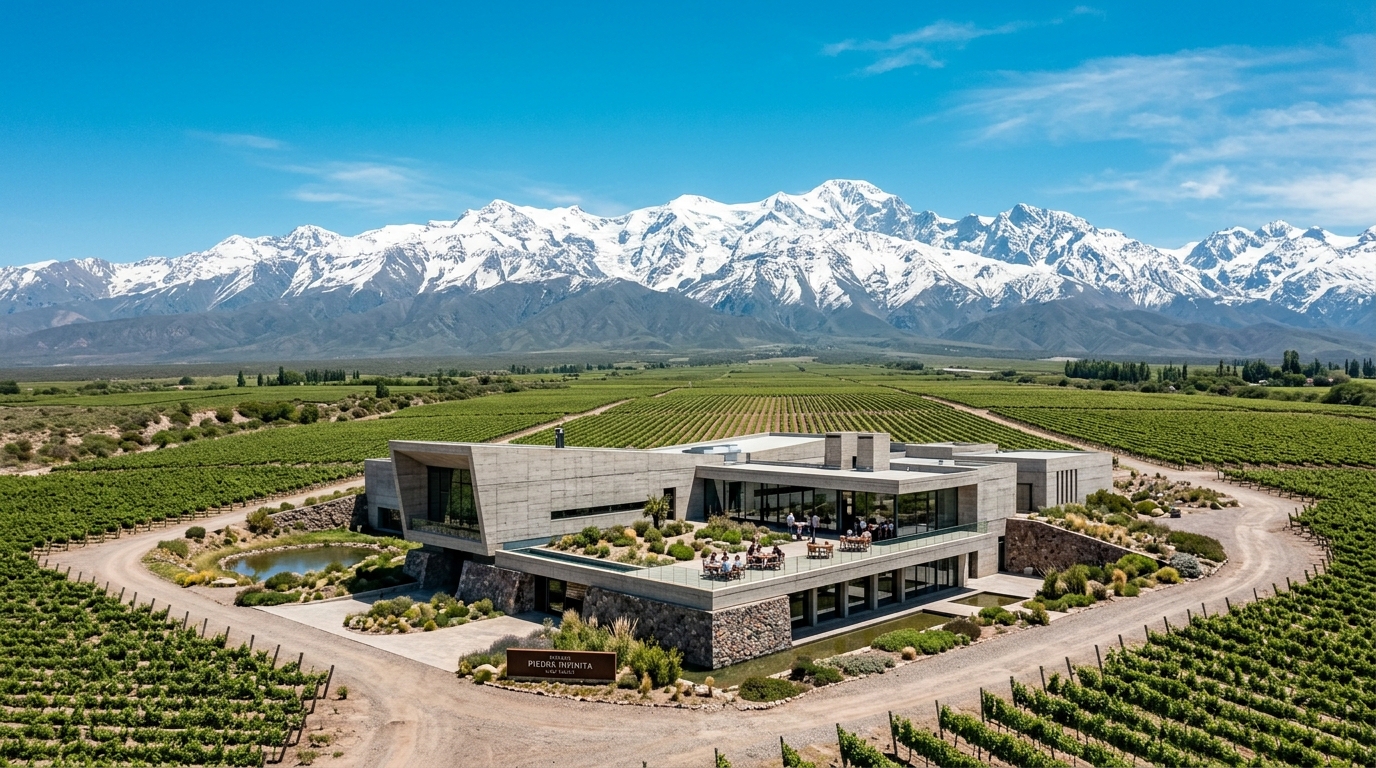
Zuccardi Valle de Uco (Piedra Infinita)
Location: Paraje Altamira, San Carlos · Elevation: 1,100m · Lead Time: 8–12 weeks
For most international travelers, Zuccardi is the single most extraordinary winery visit in the Southern Hemisphere. Built entirely with indigenous river stones and raw concrete, the architectural marvel seems to grow directly from the stony desert soil of Paraje Altamira. Voted World's Best Vineyard three years in a row (2019–2021) before entering the global Hall of Fame. Winemaker Sebastián Zuccardi crafts terroir-obsessed parcel wines fermented exclusively in concrete vats with no new oak. Its restaurant, Piedra Infinita Cocina, offers a breathtaking 4-course seasonal tasting menu facing the snow-capped front range.
Sommelier Tip: Restaurant bookings must be secured 2 to 3 months ahead online.
Bodegas Salentein (Los Árboles)
Location: Tunuyán · Elevation: 1,200m · Lead Time: 3–4 weeks
A visionary pioneer of high-altitude wine in the Uco Valley, founded by Dutch entrepreneur Mijndert Pon. Salentein combines world-class enology with art and architecture. Its cruciform underground cellar is designed like an acoustic cathedral with a circular amphitheater at its core, housing oak casks where piano concerts are held. The estate also houses the Killka Art Gallery, showcasing contemporary Argentine painters and Dutch masters, plus an upscale restaurant with floor-to-ceiling Andean panoramas.
Susana Balbo Wines
Location: Agrelo / Uco Valley sourcing · Lead Time: 3–4 weeks
Susana Balbo made history as Argentina's first female enology graduate and remains one of its most respected figures. Known as the "Queen of Torrontés" for reinventing the aromatic grape into an ultra-premium, oak-fermented, bone-dry white, her estate also produces sublime high-altitude reds under the Nosotros and Signature labels. The on-site restaurant Osadía de Crear is Michelin-recommended, providing refined farm-to-table cuisine paired with innovative single-terroir bottlings.
💡 Day Plan: How to Experience the Uco Valley
Because estates in Tunuyán, Tupungato, and San Carlos are spread out over vast distances, plan for at most two winery stops in a day. Arrive at Zuccardi for a morning technical tour, stay for a leisurely 3-hour lunch at Piedra Infinita, and visit Bodegas Salentein in the late afternoon. Hire a private remis driver or book through our concierge.