Simple rules to remember
Order of service, temperature, and matching weight: how a multi-act Argentine asado unfolds glass by glass.
How to orchestrate a 4-hour Argentine feast
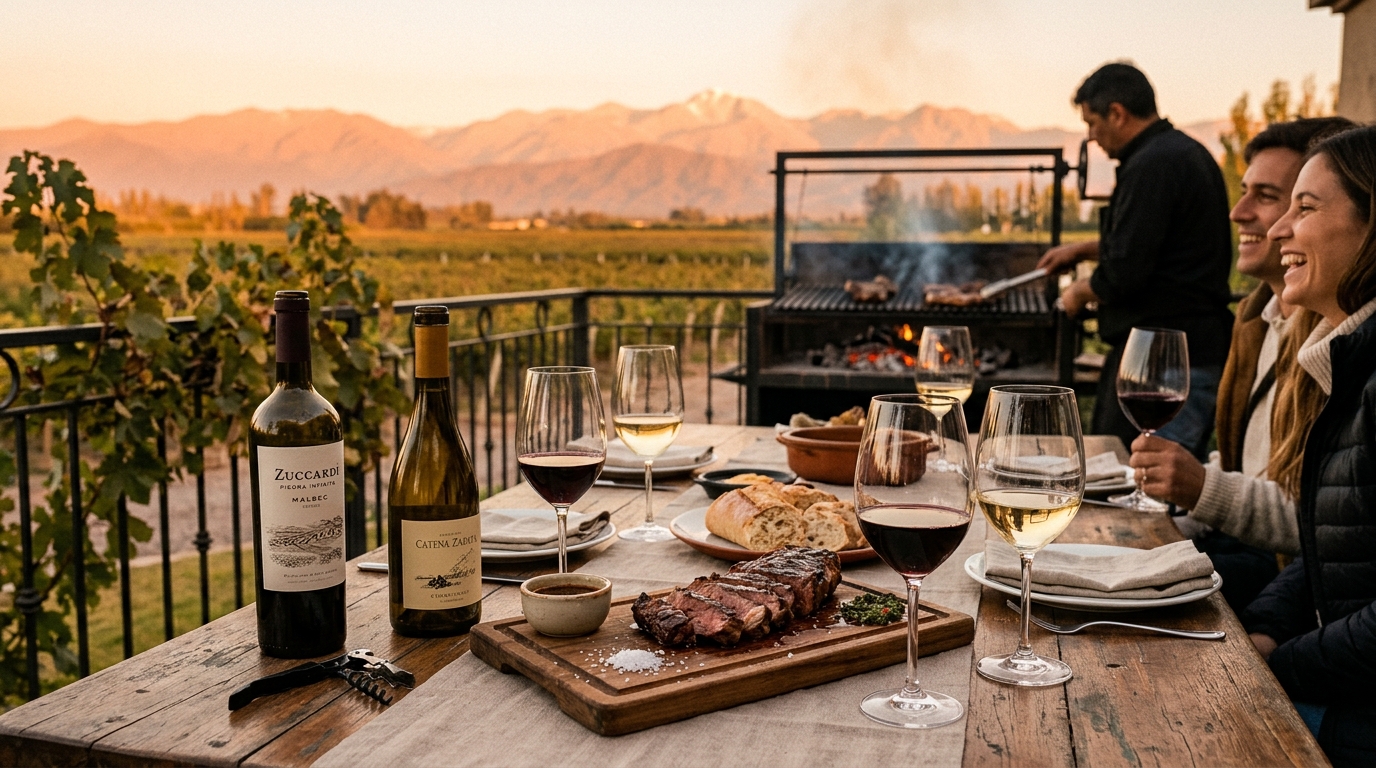
A true Argentine asado is never rushed. It is a slow, sprawling, ritualistic performance that stretches over four to five hours. A clever host knows that serving the same heavy red wine from the first piece of bread to the final steak numbs the palate. By changing gears as each course leaves the grill, the wine elevates every single bite.
1. Act I — The Opener: Provoleta & Torrontés
Before any meat touches the cutting board, molten provoleta arrives sizzling in cast iron. The Golden Rule: Never start with heavy red wine. High-altitude Torrontés or crisp Chardonnay cuts through the molten fat with refreshing citrus acidity.
2. Act II — The Offal & Sausages: Bonarda or Criolla
Next come the achuras: charred pork chorizo, blood sausage (morcilla), and crispy sweetbreads (mollejas) sprinkled with fresh lemon juice. Pour a chilled Bonarda or a dry Criolla rosé. Their soft, fruity tannins slice through spice and grease without drying the mouth.
3. Act III — The Main Event: Prime Beef & Altitude Malbec
Now bring out the crown jewels — thick-cut ojo de bife (ribeye), bife de chorizo (sirloin), and slow-roasted short ribs. Now is the moment for your finest reserve Malbec or Cabernet–Malbec blend. The robust tannins chemically scrub away rendered beef fat with every sip.
4. Act IV — The Sweet Finale: Dulce de Leche & Late-Harvest Wine
Never pair dry red wine with sweet Argentine desserts like flan mixto or alfajores. The sugar in dulce de leche makes dry reds taste aggressively sour and bitter. Finish with a chilled Late-Harvest Torrontés or sweet fortified wine.
🍾 Preserve Bottles After the Feast on Amazon
When opening multiple bottles across an asado, preserve the remaining half-bottles fresh for up to two weeks.
Taste the Ultimate Asado at Mendoza's Best Wineries
Ready to experience an authentic multi-course asado paired with top-rated reserve wines among the vines? Book a guided day tour from Mendoza.
Book Winery Tasting & Lunch Tour →🥩 Planning your trip from the capital? Explore our complete logistics guide: How to get from Buenos Aires to Mendoza (Flights, Sleeper Bus, Driving).