Reglas simples para recordar
Orden de servicio, temperatura y equilibrio de peso: cómo se desarrolla un asado argentino copa por copa.
Cómo orquestar un banquete argentino de 4 horas
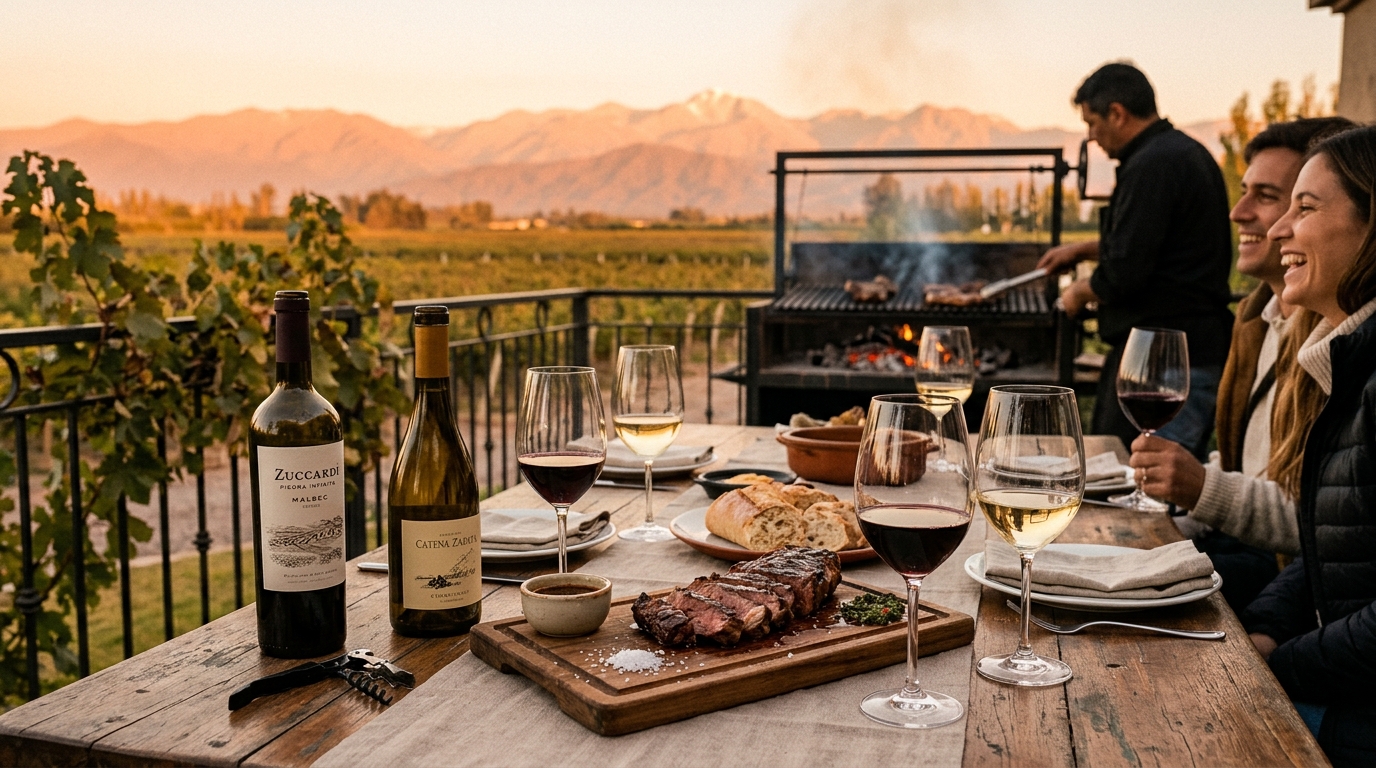
Un asado argentino auténtico jamás se come de prisa. Es un ritual que se extiende por cuatro o cinco horas. Un anfitrión experimentado sabe que servir el mismo tinto pesado desde la primera picada hasta el último corte adormece el paladar. Cambiando de marcha a medida que cada plato sale de los fierros, el vino ensalza cada bocado.
1. Acto I — La Apertura: Provoleta y Torrontés
Antes de que la carne toque la tabla, la provoleta humeante llega a la mesa dorada en sartén de hierro. La Regla de Oro: Nunca comiences con un tinto corpulento. El Torrontés de altura o un Chardonnay fresco limpian la grasa láctea con su acidez cítrica.
2. Acto II — Achuras y Embutidos: Bonarda o Criolla
Llegan las achuras: chorizos criollos, morcillas y mollejas crocantes con gotas de limón. Descorcha una Bonarda ligeramente refrescada o un rosado seco de Criolla. Sus taninos sedosos y fruta viva acompañan la grasa especiada sin saturar.
3. Acto III — El Gran Momento: Cortes Vacunos y Malbec de Altura
Aparecen las joyas de la parrilla: bife de chorizo, ojo de bife y asado de tira. Este es el momento cumbre para tu mejor Malbec Gran Reserva o corte bordelés argentino. Los taninos potentes barren la grasa animal con cada sorbo.
4. Acto IV — El Cierre Dulce: Dulce de Leche y Tardío
Nunca sirvas tinto seco con postres como flan mixto o alfajores. El azúcar del dulce de leche vuelve amargo y astringente al tinto seco. Finaliza siempre con un Torrontés de Cosecha Tardía bien frío.
🍾 Conservación de Botellas tras el Banquete en Amazon
Al descorchar varias botellas a lo largo de un asado, conserva las botellas a medio consumir en óptimas condiciones por semanas.
Prueba el Asado Definitivo en las Mejores Bodegas de Mendoza
¿Listo para vivir un asado criollo por pasos con vinos de reserva al pie de la Cordillera? Reserva un tour guiado con almuerzo en bodega.
Reservar Tour de Degustación y Almuerzo →🥩 ¿Planeas tu viaje desde la capital? Consulta nuestra guía completa de transporte: Cómo viajar de Buenos Aires a Mendoza (Vuelos, Autobús nocturno, Coche).