Food pairings
Read the small print.
When a label names not just a region but a specific sub-zone — Paraje Altamira, Gualtallary, Los Chacayes, Las Compuertas — pay attention. These are precise plots of ground (Paraje Altamira became a recognised Geographical Indication in 2013), and a producer who names one is usually telling you the wine is more site-specific, more carefully made, and a notch above a generic “Mendoza” bottling. The more exact the place on the label, the more the wine has to say.
Altitude is a quality signal. Many Argentine producers now print the vineyard elevation on the label. Higher generally means more colour, freshness and concentration — a genuinely useful shortcut.
Spend a little to learn a lot. Entry-level Argentine Malbec is one of the best value reds in the world, but moving up even modestly in price — into single-vineyard or higher-altitude bottlings — shows you what the grape can really do.
Glassware and a few degrees matter. Malbec shows best slightly below room temperature, in a generous bowl that lets the fruit and violet open up — our guide to serving Argentine wine covers the temperature, glasses and decanting in full. Most young Malbec benefits from decanting — see when and how long to decant.
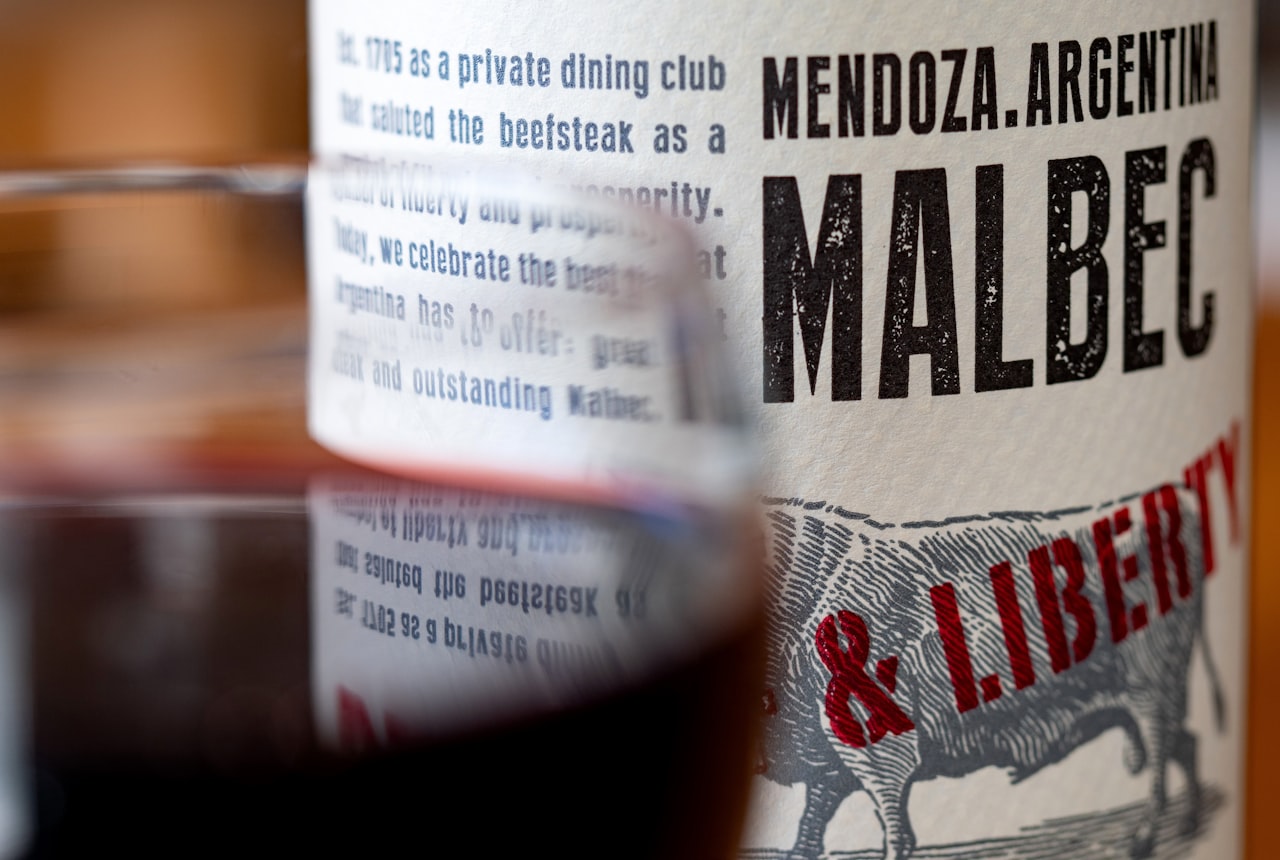
And then drink it the way Argentina does — across a table, beside fire and grilled meat. It is not a random pairing: Malbec's smooth but firm tannins cut cleanly through the fat of grilled beef, resetting the palate so the next bite tastes as good as the first. We pair the two properly in What to drink with asado.