How to serve wine at the right temperature
The cheapest upgrade you can give any bottle — no better wine required, just a few degrees cooler or warmer than most people pour.
Temperature is the cheapest upgrade you can give a bottle of wine. You don't need a better wine — you need the wine you already have, served a few degrees cooler or warmer than most people pour it. Get it right and a simple Malbec tastes fuller and rounder; a Torrontés turns bright instead of flabby. Get it wrong and even a serious bottle shows up muddy and dull.
Here is how to serve every kind of wine at the temperature that lets it taste like itself.
The quick reference
If you remember nothing else, remember this: most reds are served too warm, and most whites are served too cold. Pull the white out of the fridge twenty minutes before you pour it. Put the red into the fridge for twenty minutes before you open it. That single habit fixes 90% of home pours.
- Sparkling (Champagne, Argentine espumante): 6–8 °C (43–46 °F). Properly cold. The chill holds the bubbles tight and keeps the wine crisp.
- Light, aromatic whites (Torrontés, Sauvignon Blanc): 8–10 °C (46–50 °F). Cold enough to keep the aromatics lifted and the acidity fresh.
- Full-bodied whites (oaked Chardonnay): 10–13 °C (50–55 °F). Too cold and you mute the texture and the toasty notes that make these wines interesting.
- Rosé: 8–11 °C (46–52 °F). Treat it like an aromatic white.
- Light reds (Bonarda, lighter Pinot Noir): 12–14 °C (54–57 °F). Yes, reds can go in the fridge. A light red served slightly cool tastes juicier, not thinner.
- Full-bodied reds (Malbec, Cabernet, blends): 15–18 °C (59–64 °F). This is cooler than room temperature in most homes. “Room temperature” is a rule from cold European cellars, not from a warm kitchen in Mendoza or Buenos Aires.
Why a few degrees changes everything
Temperature controls how a wine releases its aromas and how its structure feels in your mouth.
Warmth lifts aroma and alcohol. Cold tightens acidity and tannin. So a red served too warm smells boozy and tastes soft and loose — the alcohol jumps out and the fruit goes jammy. The same red, brought down a few degrees, smells of fruit and earth instead of spirit, and feels firmer and more defined. A white served too cold smells of almost nothing and tastes only of “cold and tart”; let it warm slightly and the peach, citrus, and floral notes wake up.
You are not changing the wine. You are changing how much of it you can actually taste.
How to get a bottle to the right temperature, fast
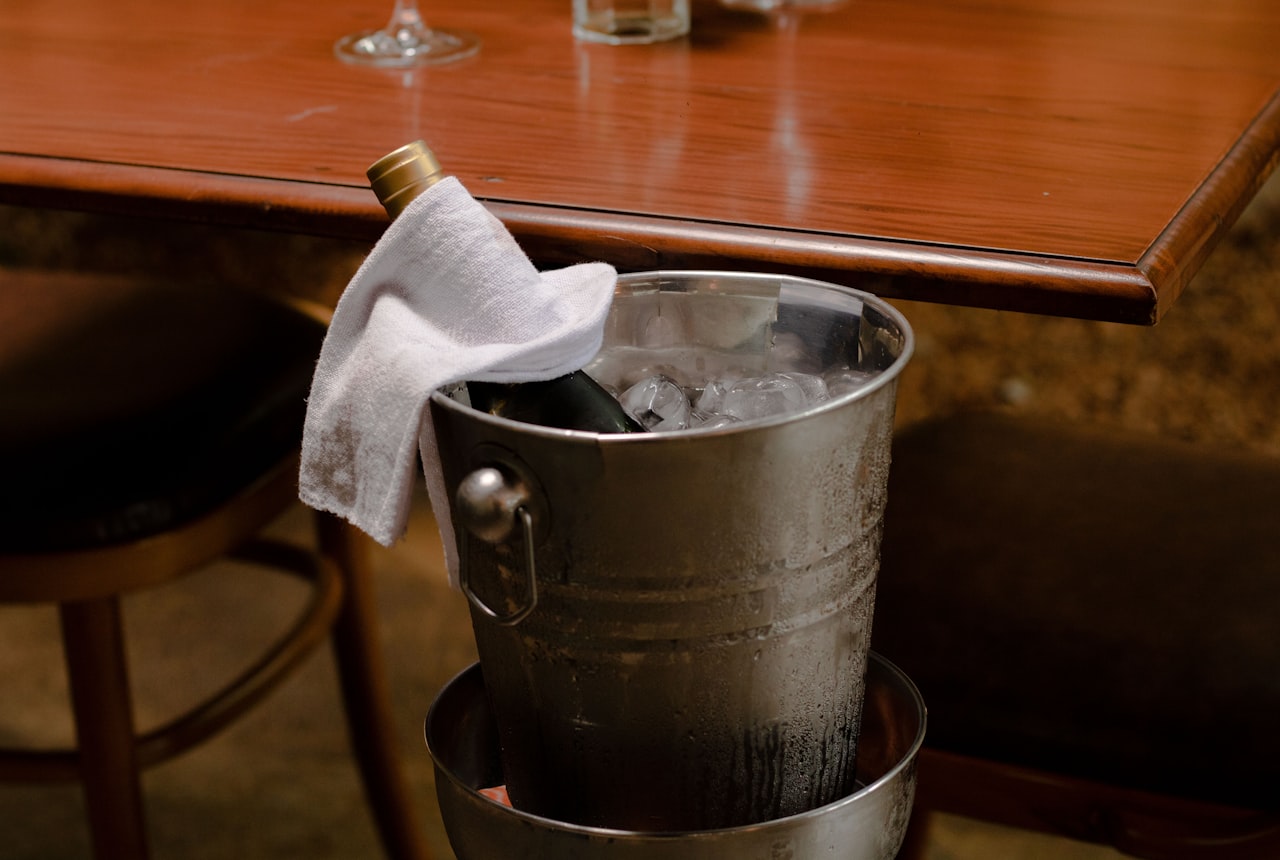
To chill quickly (the only method that really works): fill an ice bucket with ice and water — half and half. Water conducts cold far faster than ice alone, which only touches the glass in a few spots. A bottle dropped into ice-water reaches serving temperature in about 15–20 minutes, versus 40+ minutes for ice alone or an hour in the fridge. Add a handful of salt to the ice water and you'll shave off a few more minutes.
To warm a too-cold red: just pour it and wait. A glass in a warm room climbs a degree or two within minutes. Cup the bowl of the glass in your hand if you're impatient. Never microwave a bottle or set it near a stove — uneven heat flattens the wine.
To hold a bottle steady through a long dinner: keep whites and sparkling in the ice bucket between pours, and keep reds out of the warm room — a cool spot on the counter is enough. A bottle left standing on a summer table will drift up past 22 °C within the hour, and that's where wine starts to taste tired.
The 20-minute rule, restated: fridge-cold white → 20 minutes out before serving. Room-warm red → 20 minutes in the fridge before opening. Sparkling → straight from a proper chill. Simple, and it covers almost every situation.
A few tools that make it effortless
You can absolutely serve wine well with nothing but a fridge, a bowl, and a little patience. But three small things make it foolproof, especially when you're serving guests: a bottle thermometer that reads the temperature in seconds, a good ice bucket for fast chilling, and an insulated chiller sleeve for the table if you'd rather not deal with melting ice.
As an Amazon Associate I earn from qualifying purchases.
The short version
Serve sparkling and aromatic whites cold, full whites and rosé just-cool, light reds slightly cool, and big reds cooler than your warm room. When in doubt: white out of the fridge for twenty minutes, red into the fridge for twenty. It costs nothing, it works on the bottle you already own, and it's the single fastest way to make any wine taste better.