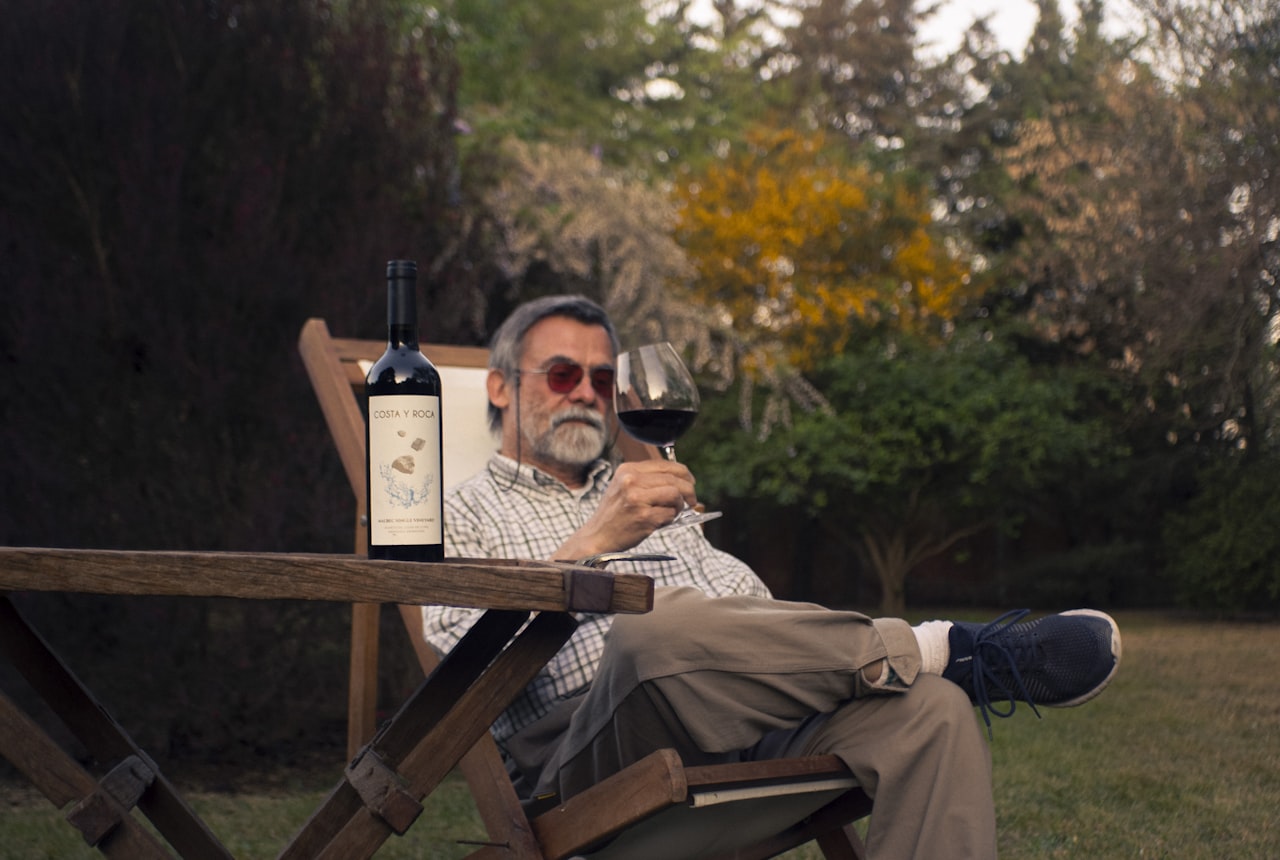
Start with Malbec
The one-line answer
If you only read one line of this guide: buy a mid-priced Mendoza Malbec from a recent vintage, around 12–25 USD/EUR, and you almost cannot go wrong. That's the safe, joyful, no-fuss starting point. Now let's earn the deeper version.
The three bottles to start with
You don't need to taste forty grapes to “get” Argentine wine. Three will do it.
1. A friendly Mendoza Malbec (red). This is the country's flagship — Argentina's calling card. Malbec is plush, dark-fruited and soft on tannin, with notes of plum, blackberry and a little violet and spice. It is the easiest red in the world to like. Look for: a Malbec from Mendoza, ideally with “Luján de Cuyo” or “Uco Valley” on the label.
2. A Cafayate Torrontés (white). Argentina's signature white, Torrontés, smells like jasmine and peach blossom and finishes dry — gorgeously aromatic on the nose, refreshing on the palate. It's unlike almost any white you've had. Look for: “Torrontés” from Cafayate or Salta, ideally a recent vintage.
3. A juicy Bonarda (red). Bonarda is Argentina's quiet superstar — fruity, soft, easy-drinking, and usually cheaper than equivalent Malbec. Try it once and it becomes your default weeknight wine. Look for: “Bonarda” on the label from any Mendoza producer.
Drink those three, in that order, and you'll already understand more about Argentine wine than 90% of casual drinkers.
How to read an Argentine wine label without fear
- The grape. Argentine labels almost always show the grape variety — Malbec, Torrontés, Bonarda, Cabernet Sauvignon. This is unlike France, where you'd have to know that “Cahors” means Malbec.
- The region. From most to least important for quality (in general): Uco Valley > Luján de Cuyo > Mendoza (broader) > San Juan / La Rioja / Salta (each has its own specialties — see our regions guide).
- The vintage. Argentina has a pretty consistent climate, so vintage variation is small. For most reds, drink the last 2–6 years; for whites and rosés, the last 1–3. Don't overthink it.
- The altitude. Many serious labels print the vineyard's elevation — e.g. “1,200 m.” Higher = generally fresher, more elegant; lower = riper, plusher. (More in our altitude story.)
- Alcohol level. Argentine reds often land at 13.5–14.5%. Above 15% can mean a hot-climate, jammier style; below 13.5% is usually fresher and cooler.
Want to read any bottle, anywhere in the world? Start with our full guide to how to read a wine label.
Beyond Malbec: where to go next
Once you've fallen in love with Malbec, the most rewarding next steps are:
- Cabernet Franc — the elegant, aromatic “prince” of the Uco Valley. The grape most serious Argentine winemakers are most excited about.
- Chardonnay — Argentina's white revolution, lean and mineral, from limestone-streaked Gualtallary.
- Cabernet Sauvignon — the structured, age-worthy backbone (and the perfect partner to Malbec in a blend; see Malbec vs Cabernet Sauvignon).
- Pinot Noir — surprisingly excellent from cool Patagonia or the highest Uco sites.
- Criolla & País — the country's 500-year-old heritage grape, finally being taken seriously after 2024. Pale, fresh, modern, delicious.
If you want to explore by region instead of grape, start with our regional guides — Mendoza is the heart; Salta the dramatic high north; Patagonia the cool, windswept south.