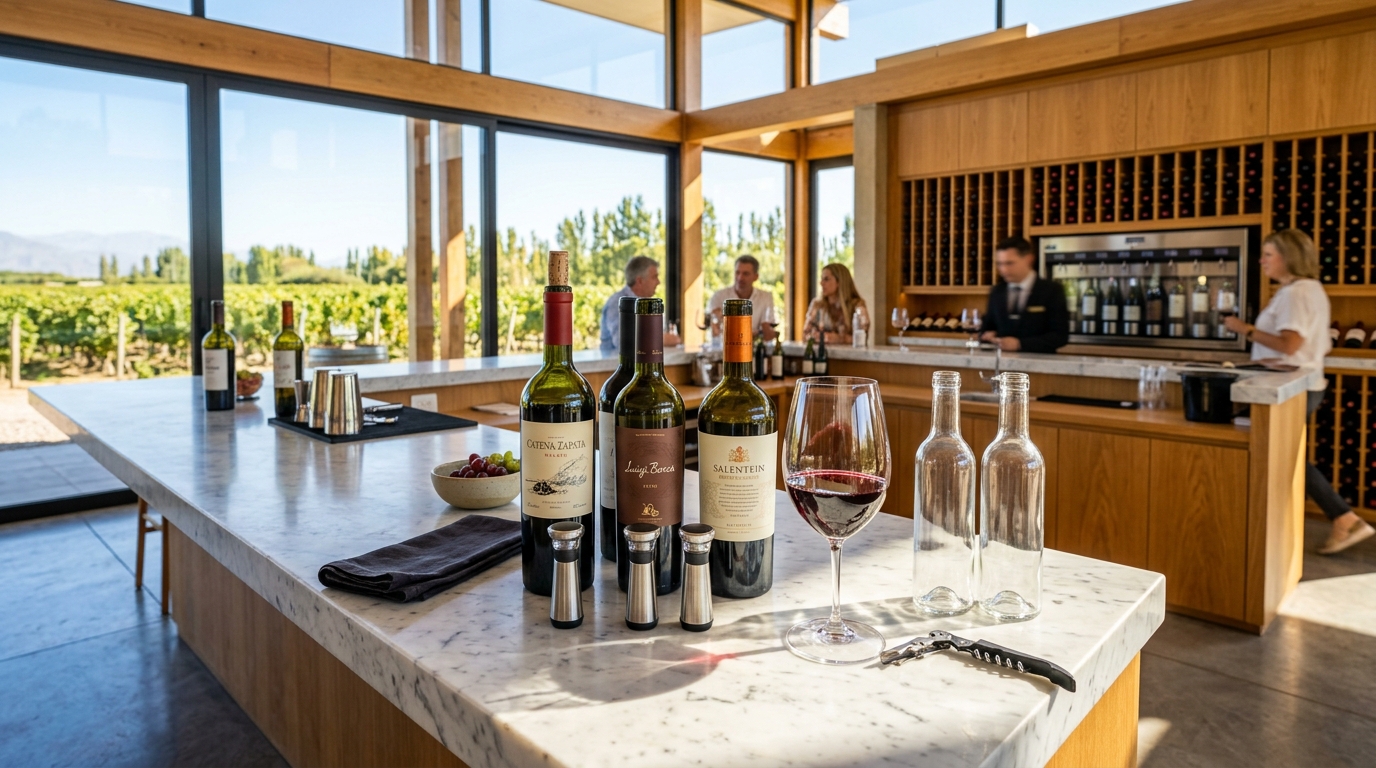
Cómo Conservar el Vino Abierto
El protocolo maestro del sommelier: la regla de la heladera, la técnica de la media botella de 375 ml y la física del almacenaje vertical.
Protocolo Maestro de Conservación
Muchos bebedores creen que una vez descorchada la botella, está condenada a morir en 24 horas si no se termina. En realidad, la supervivencia del vino se rige por la termodinámica y la química de superficies.
Dominando cuatro protocolos físicos sencillos, podés mantener intactos y llenos de vida tus Malbec argentinos, Tannat y Torrontés entre 4 y 6 días.
1. El Imperativo de la Heladera (Sí, También para Tintos)
El mito más perjudicial en la cultura del vino es que el tinto debe dejarse a temperatura ambiente una vez abierto. A 22°C–24°C, la oxidación avanza a máxima velocidad y las bacterias acéticas se multiplican rápidamente.
Poner la botella retapada en la heladera a 3°C–5°C reduce drásticamente la energía cinética molecular. La oxidación se ralentiza en más de un 70%. Al querer beber nuevamente, solo serví la copa 20-30 minutos antes para que tome temperatura natural (16°C–18°C).
2. El Secreto del Trasvase a Media Botella (375ml)
Cuando una botella de 750ml queda por la mitad, queda atrapado un volumen enorme de aire (375ml). Incluso en frío, ese oxígeno irá apagando los aromas frutales en 48 horas.
El Truco del Sommelier: Guardá una botellita limpia con tapa a rosca de 375ml. Al abrir una botella grande, pasá la mitad inmediatamente a la botellita hasta el cuello y cerrala bien. Al no haber cámara de aire, esa mitad se conservará perfecta por 6 a 8 días.
3. Guardar Estrictamente en Posición Vertical
Las botellas cerradas se guardan acostadas para humectar el corcho. Nunca hagas esto con una botella ya abierta.
De pie, solo la pequeña superficie circular del cuello (~4.5 cm²) toca el aire. Acostada, el líquido se extiende por todo el cuerpo de la botella, alcanzando más de 70 cm² de contacto con el oxígeno, acelerando la oxidación por quince.
Herramientas Recomendadas de Conservación
Combiná estos hábitos cotidianos con una bomba de vacío o gas argón para sumar otros 2 a 3 días de frescura:
Como Afiliado de Amazon, Argentina Through Wine genera ingresos por compras calificadas.
4. Cómo Saber si el Vino se Picó u Oxidó
Antes de descartar una botella, analizá estas tres señales sensoriales:
- Vista: El tinto pasa de rubí brillante a marrón apagado; el blanco pasa de dorado pajizo a color sidra turbia.
- Nariz: Desaparece la fruta fresca, reemplazada por manzana verde magullada (acetaldehído) o vinagre punzante (ácido acético).
- Boca: Sabor plano, ácido y áspero sin centro frutal y con final avinagrado.