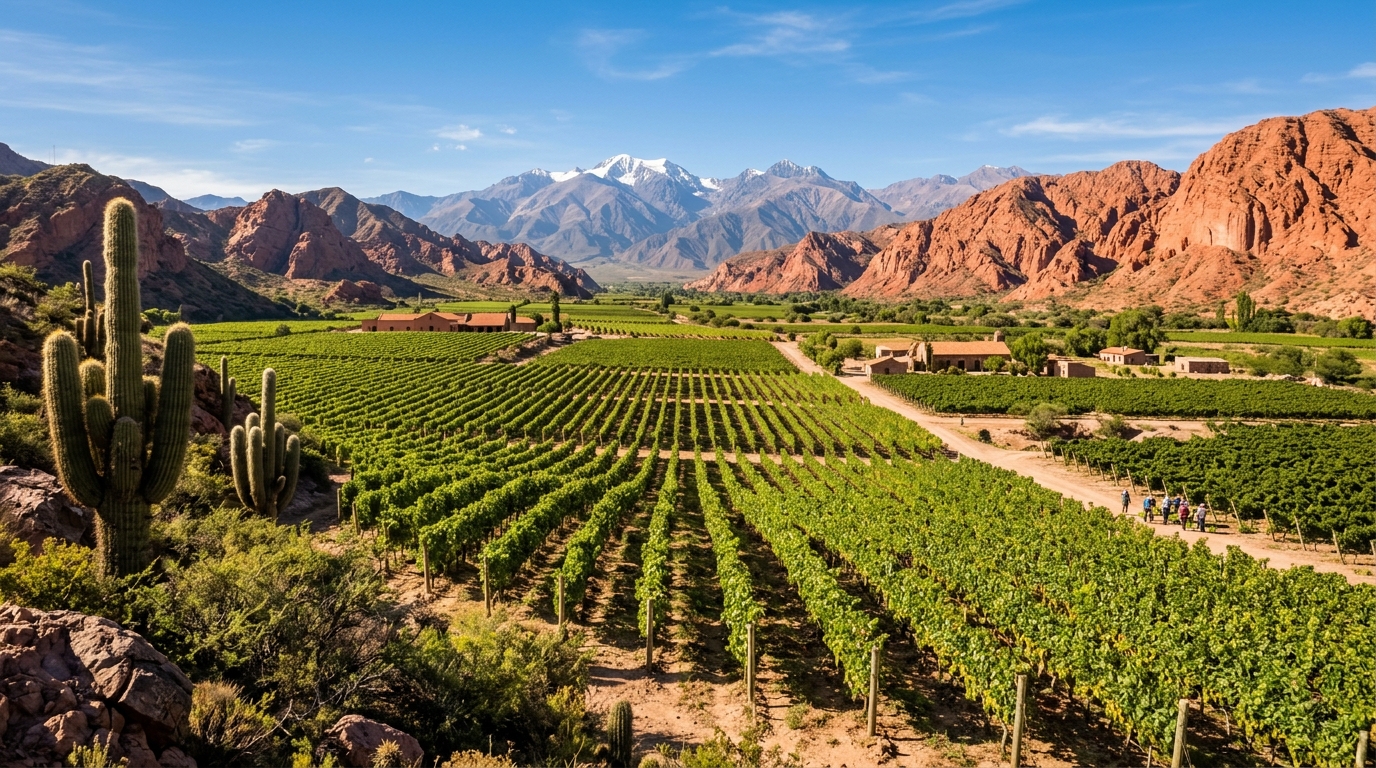
Cafayate: Viñedos en el Cielo Calchaquí
A 1.700 y hasta 3.111 metros sobre el nivel del mar, bodegas de adobe y cañones rojizos dan vida a los vinos más extremos de Argentina.
El Oasis a 1.700 Metros de Altura
Cafayate es el corazón palpitante del valle — un pueblo apacible de arquitectura colonial y adobe erigido alrededor de una plaza arbolada, rodeado de bodegas centenarias a las que se puede llegar caminando o en bicicleta. Concentra la gran mayoría de las viñas salteñas, desde históricas fincas como El Esteco hasta proyectos familiares biodinámicos como San Pedro de Yacochuya.
El camino hasta aquí es en sí mismo un espectáculo inolvidable. La Quebrada de las Conchas, a lo largo de la Ruta 68 entre la ciudad de Salta y Cafayate, despliega imponentes anfiteatros de arenisca roja esculpidos por el viento y el tiempo; su formación más famosa, la Garganta del Diablo, es una parada obligada en el viaje.
Los Viñedos entre las Nubes de la Ruta 40
Adentrándose en el valle por la mítica Ruta 40, el camino asciende por Molinos y Cachi hacia los viñedos más altos del planeta. Aquí reside Bodega Colomé (fundada en 1831), la más antigua en funcionamiento continuo de Argentina. Su viñedo Altura Máxima, plantado a 3.111 metros, produce uvas de concentración salvaje acariciadas por pura radiación solar andina.
Visitar Cafayate es sumergirse en la Argentina auténtica: siestas reparadoras, empanadas salteñas horneadas en barro al fuego de leña y copas de Torrontés helado bajo la sombra de los parrales.
A continuación, Capítulo 3 de 4 Si Mendoza le pertenece al Malbec, Salta es la tierra prometida del Torrontés. Leer Capítulo 3: Tierra del Torrontés →