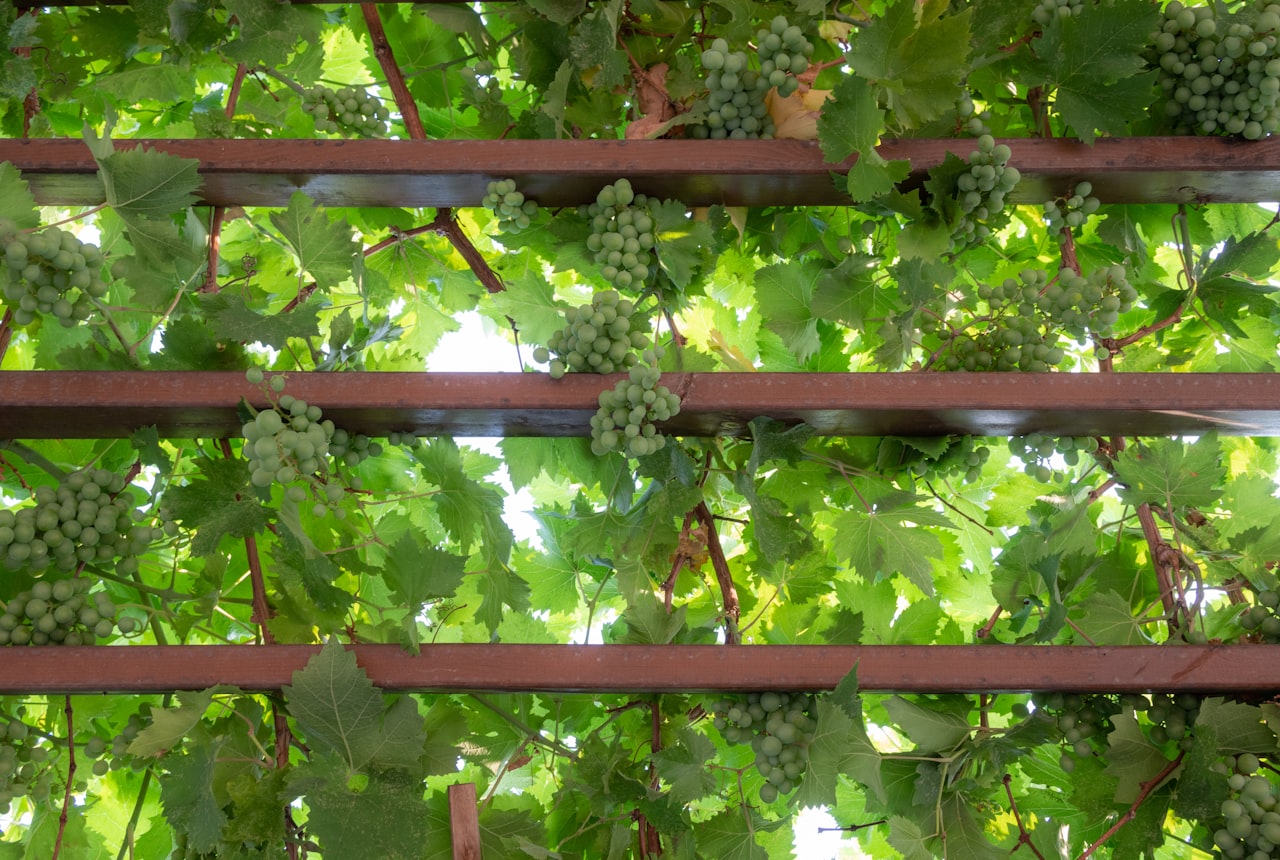
The grapes they brought
This is where the story gets concrete, because the Italians didn't just provide labor — they brought a Europe-tested wine culture into a country that had been making rough, colonial table wine for centuries. Their influence reshaped the industry in a few specific, lasting ways.
They brought professional winemaking. Northern Italians knew how to grow, ferment, blend and bottle wine properly. They worked as growers, oenologists, mechanics, builders and businesspeople — and they staffed the new generation of bodegas that built modern Mendoza.
They brought grape varieties. Most famously Bonarda, the country's second most planted red, was carried across by Italian immigrants in the late 19th century (under that confusing name, even though DNA testing has since revealed the grape is actually France's Douce Noir of Savoie — close enough to northern Italy to ride along with them).
They brought a system of training the vines. That tall, overhead, leafy “green roof” you see in older Mendoza vineyards — the parral or pergola — is essentially the pergola trentina of northern Italy. It shades the grapes from intense Andean sunlight in a way that flat European trellis systems do not, and it remains one of the most distinctive visual signatures of Argentine viticulture. A wine geek can spot the Italian influence from the highway.
They built the dynasties. The most famous Argentine wine family — the Catenas — is itself Italian. Nicola Catena left Belforte del Chienti, in Italy's Marche, in 1898 and settled in Mendoza, founding a small winery in 1902. Four generations later, his great-granddaughter Laura Catena runs what is widely considered Argentina's most influential wine estate, and the story of how Malbec was saved in the 1990s is, at its heart, an Italian-Argentine story.