What is Malbec
If you've only met Malbec once, you've still only met one of its faces — because altitude rewrites the grape. Broadly, though, the Argentine style runs toward ripe black fruit (blackberry, dark plum), a lift of violet, and a warm note of cocoa or mocha when oak is involved, all carried on tannins so smooth the wine feels almost plush. It is, famously, one of the easiest serious red wines to like.
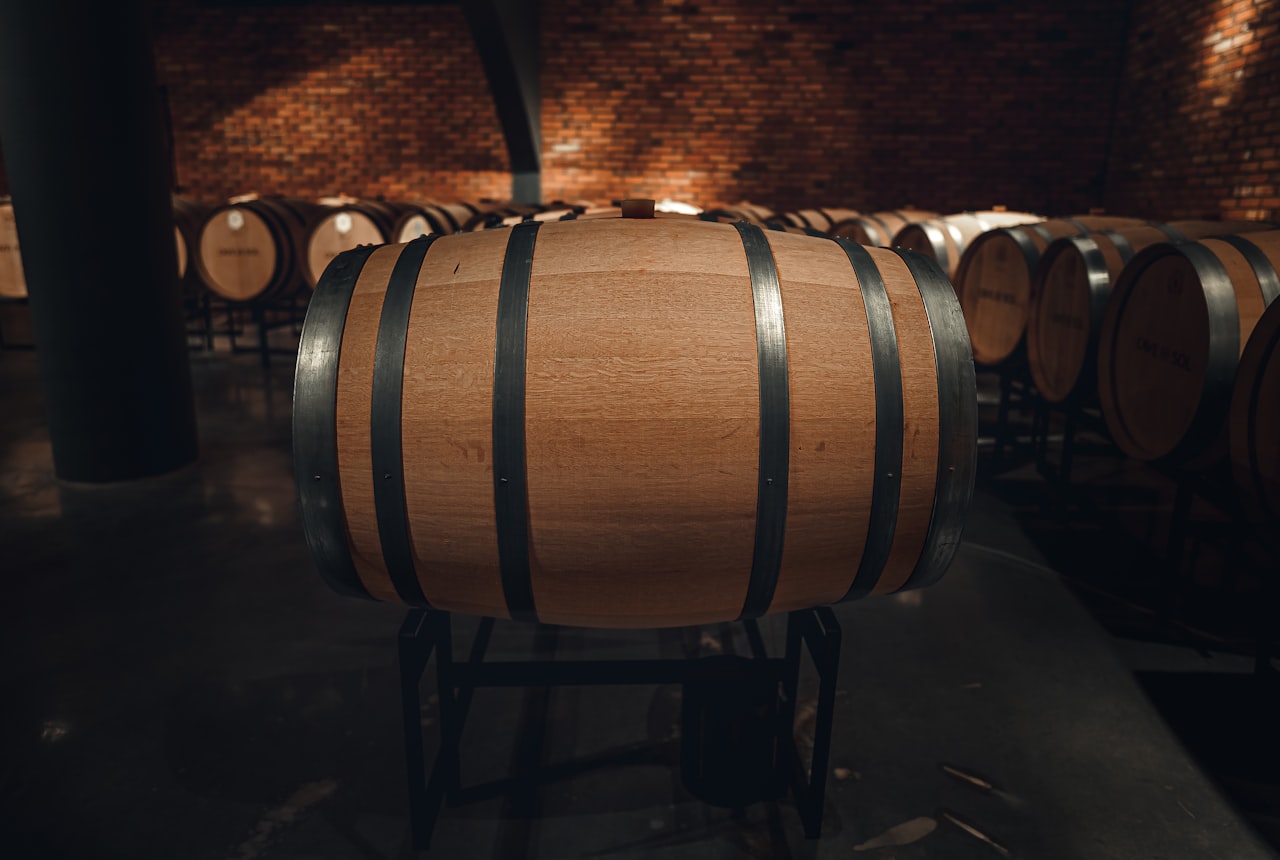
Where the cocoa comes fromThe vanilla, mocha and smoke in a serious Malbec aren't really the grape — they're the barrel. Read how oak barrels shape a wine.
But where it grows matters enormously:
- Luján de Cuyo — the historic heart, the birthplace of Argentine Malbec. Classic, generous wines: ripe plum and dark cherry, a hint of cocoa, a plush and approachable shape.
- Valle de Uco — higher and cooler, with vineyards climbing past 1,500 metres. Here Malbec gains brightness and floral lift, more elegance, more freshness, and real ageing potential.
- Salta (Cafayate), in the far north — some of the highest vineyards on earth, well above 1,500 metres and reaching toward 3,000. The result is Malbec of almost shocking concentration and colour.
- Patagonia, in the south — cooler still, giving lighter, redder-fruited, more delicate wines.
One country, one grape, and a spectrum of completely different wines — which is the whole reason Argentine Malbec stays interesting past the first bottle.
If it helps to picture it as a single line, from the lightest, freshest styles to the deepest, most powerful:
Patagonia (delicate, red-fruited) → Uco Valley (elegant, floral, fresh) → Luján de Cuyo (plush, classic, full) → Salta (intense, concentrated, dark)