Step 2
of 4
Cork — what's right, what's wrong
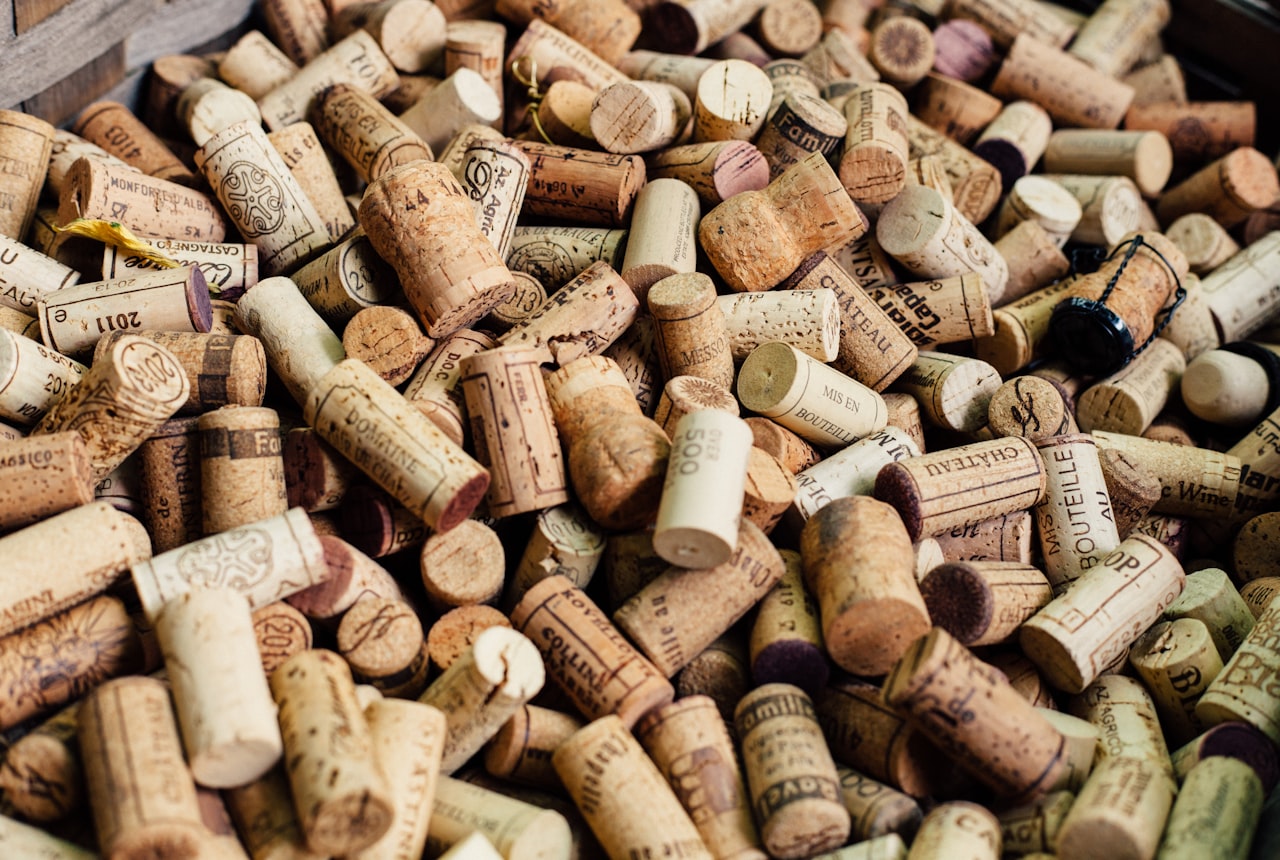
Built for long aging — at a real risk. Natural cork is harvested from the bark of cork oak trees, mostly in Portugal and Spain. The tree isn't cut down; the bark grows back over 9 years. Sustainable. Romantic.
With one big problem: TCA (cork taint) — a compound formed when chlorine reacts with natural fungi in cork bark. Gives wine a musty, wet-cardboard, damp-basement, wet-dog aroma. Affects roughly 3–5% of cork-sealed bottles.
What cork does well: slow, controlled oxygen for serious reds aging 10+ years. There's still no proven substitute for high-end Bordeaux or icon Malbec.